The Best Low Glycemic Breakfast Foods For a Healthy Morning

Medical Reviewer: Christine Russell, MS, RD, LD, CDCES

Author: Jennifer Huddy, MS, RD, LD

Summary
- The glycemic index assigns a number to carbohydrate-rich foods from 0-100 based on how quickly the food will raise your blood glucose levels.
- Starting your day with a low-glycemic breakfast can help regulate your blood sugar levels, especially if you have diabetes.
- Low-glycemic breakfast foods include steel-cut oats, berries, eggs, Greek yogurt, and whole-grain bread.
You’ve probably heard of the glycemic index (GI) before but might be unsure what those numbers mean.
The GI rating of foods tells you how quickly a carbohydrate will raise your blood sugar levels, with 0 having no impact and 100 having a significant impact.
Overall, research on the glycemic index is mixed.
Experts recommend focusing on the overall balance of your eating pattern and considering the GI a tool that may guide you in choosing high-quality carbohydrates.
Starting your day with a low-glycemic breakfast may help regulate your blood sugar levels and keep you full all morning.
Continue reading for our top 10 low-GI breakfast ideas and to learn more about how the glycemic index works.
{{splash}}
Top 10 Low Glycemic Breakfast Ideas
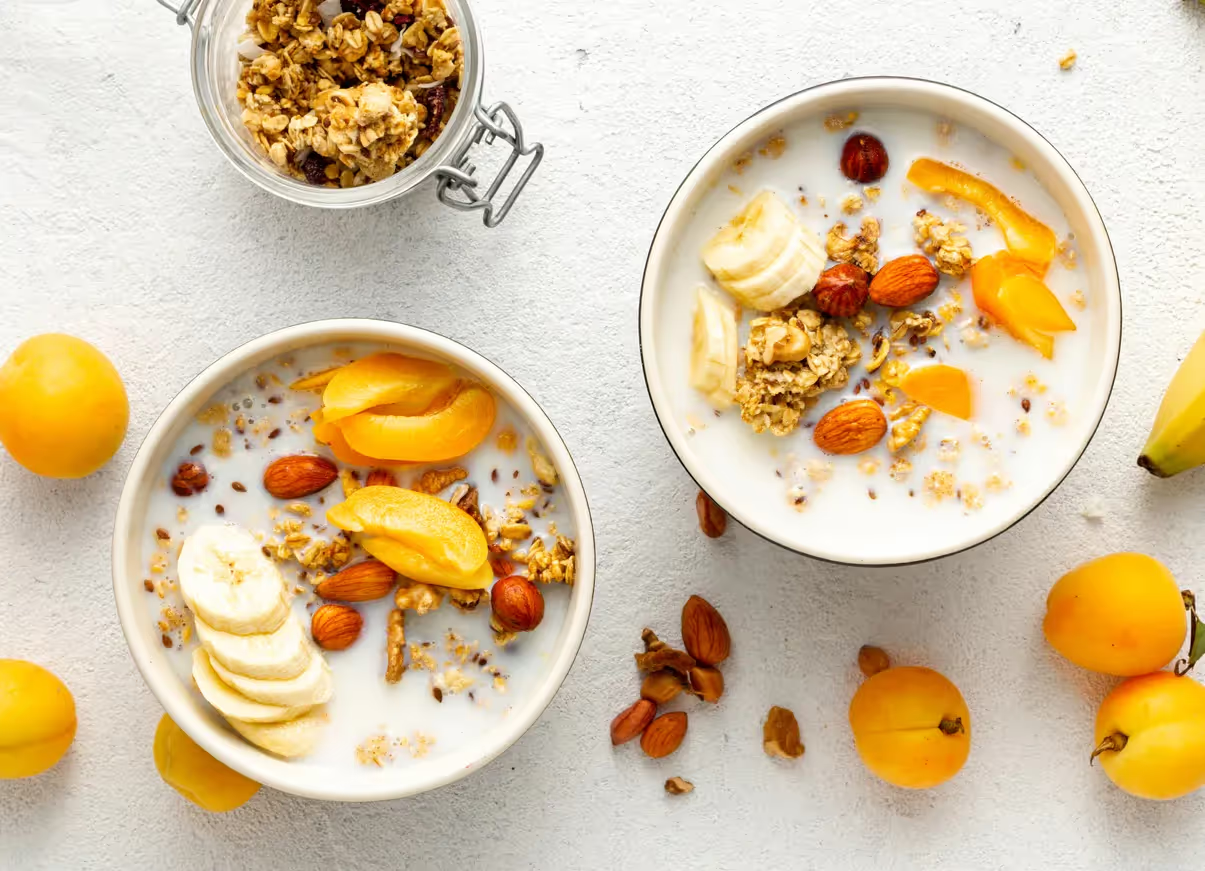
Start your day with one of these low-GI breakfast ideas packed with high-fiber foods like oats, eggs, fruits, and veggies.
1. Steel-Cut Oatmeal with Blueberries
Enjoy this blood sugar-friendly breakfast by cooking steel-cut oats in milk and topping with blueberries.
Sprinkle with walnuts or stir in almond butter for added protein.
Though steel-cut oats have the lowest glycemic index, old-fashioned oats are only a few points higher on the scale, making them an acceptable substitution.
However, keep in mind that quick-cooking oats have a high glycemic index.
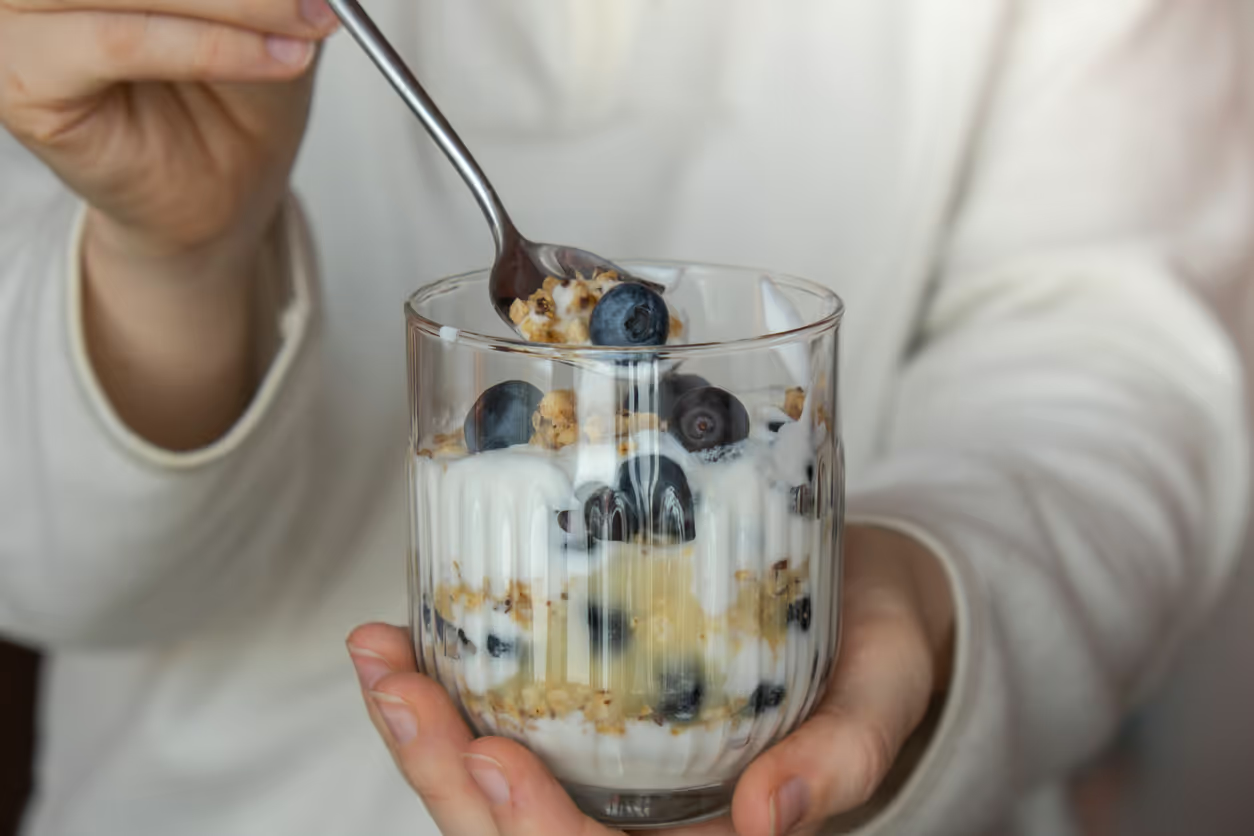
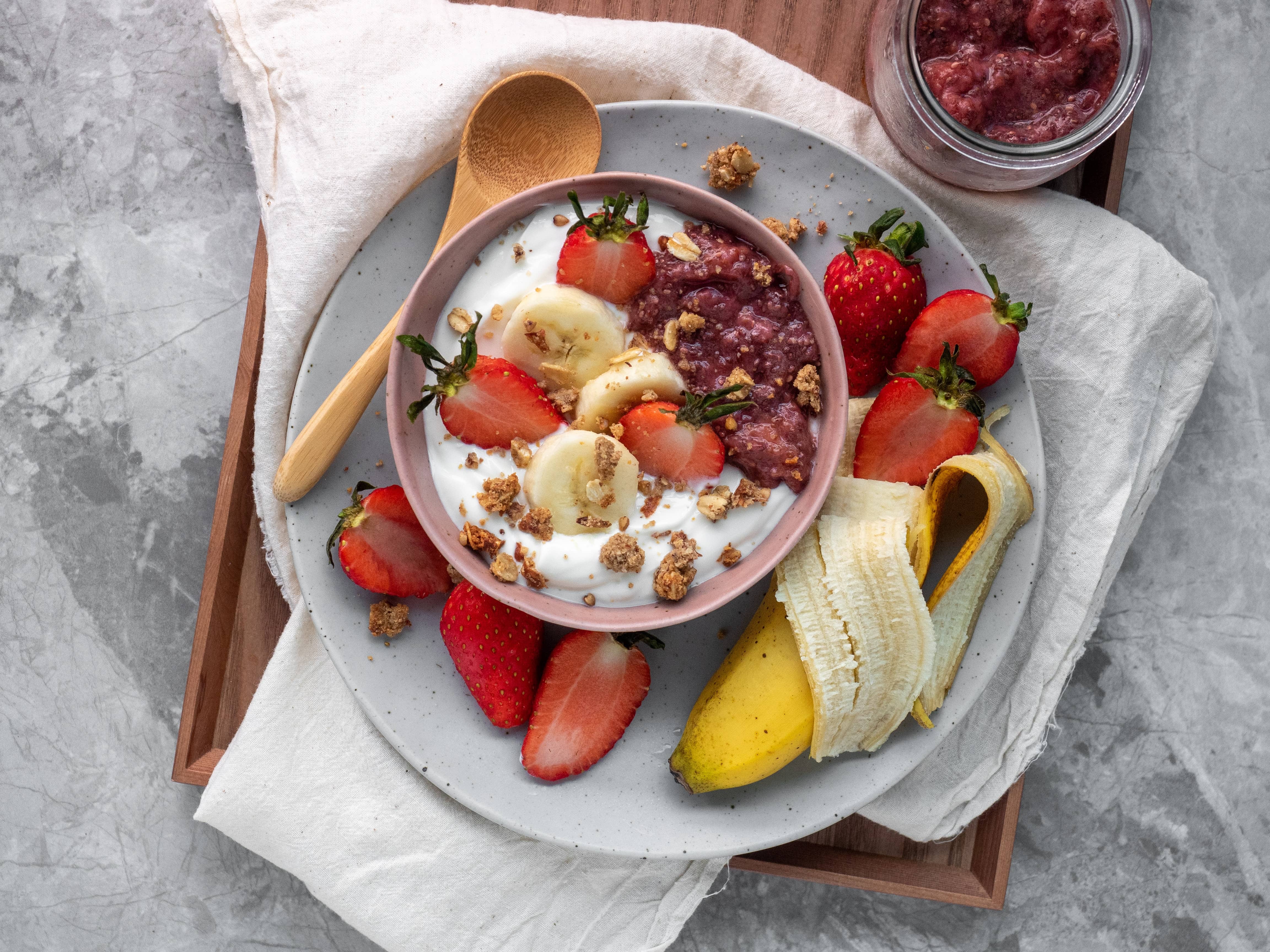
2. Yogurt Parfait With Bran Flakes And Berries
For a no-heat breakfast you can make in advance, try yogurt parfaits.
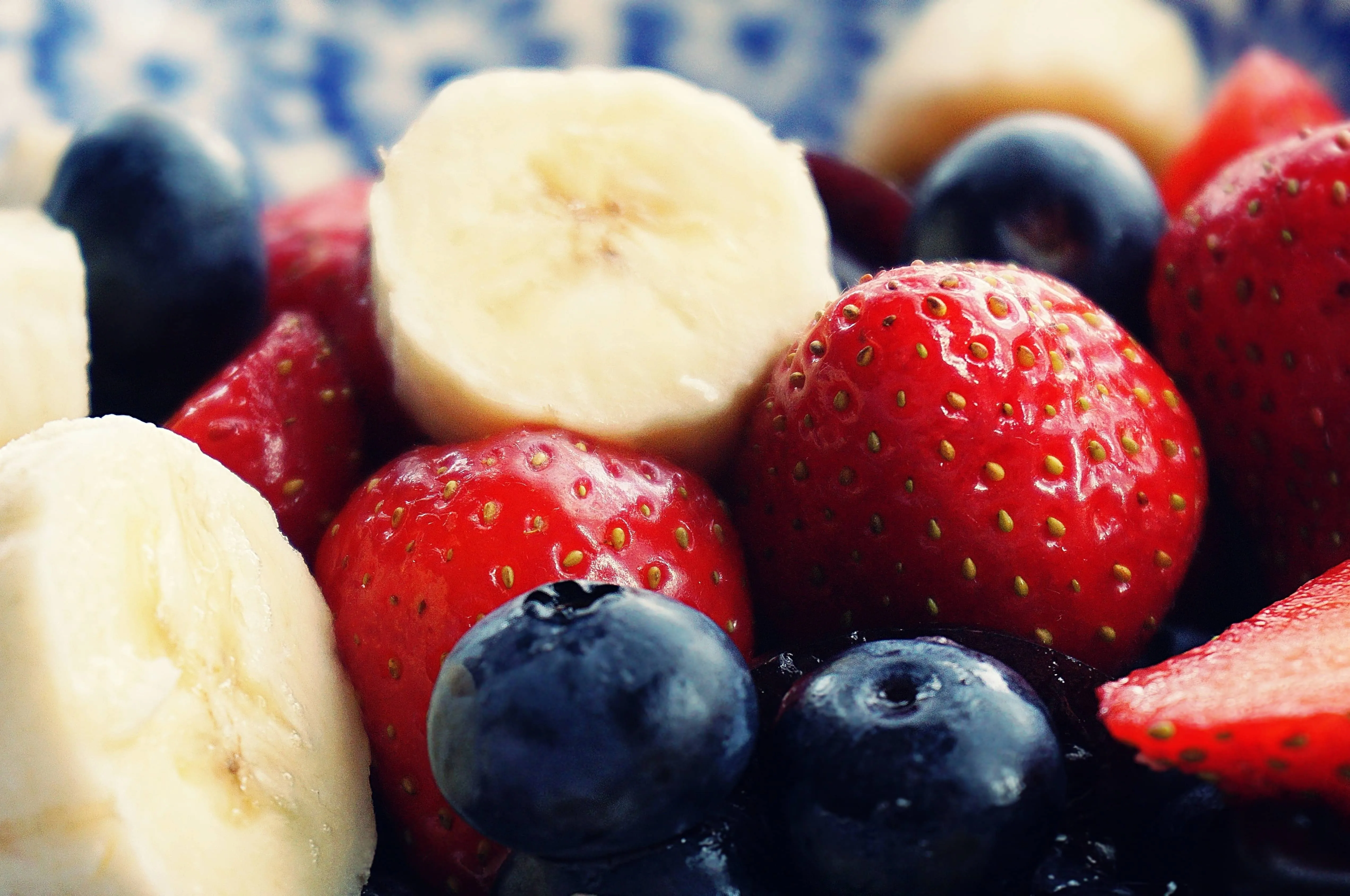
Layer unsweetened Greek yogurt with mixed berries and top with bran flakes for a crunch.
You can also add chopped nuts.
To save time, try using frozen berries–simply make up your parfait the night before so the fruit has time to defrost.
Wait until the morning to add crunchy toppings.
3. Eggs With Whole Grain Toast
A classic breakfast option, eggs have a glycemic index of zero and provide a rich source of protein.
Cook your eggs in the way you prefer–scrambled, hard-boiled, or fried.
To balance the meal, serve with low-glycemic sides like whole wheat toast and an orange.
4. Breakfast Burrito
To make a blood sugar-friendly breakfast burrito, start with a whole wheat tortilla.
Then add low-glycemic ingredients such as:
- Eggs or scrambled tofu.
- Beans (black beans, pinto beans, etc.)
- Veggies (spinach, bell peppers, mushrooms, onions, etc.)
- Avocado.
- Salsa.
- Cheese.
Try making a batch of burrito filling at the beginning of the week for easy morning assembly.
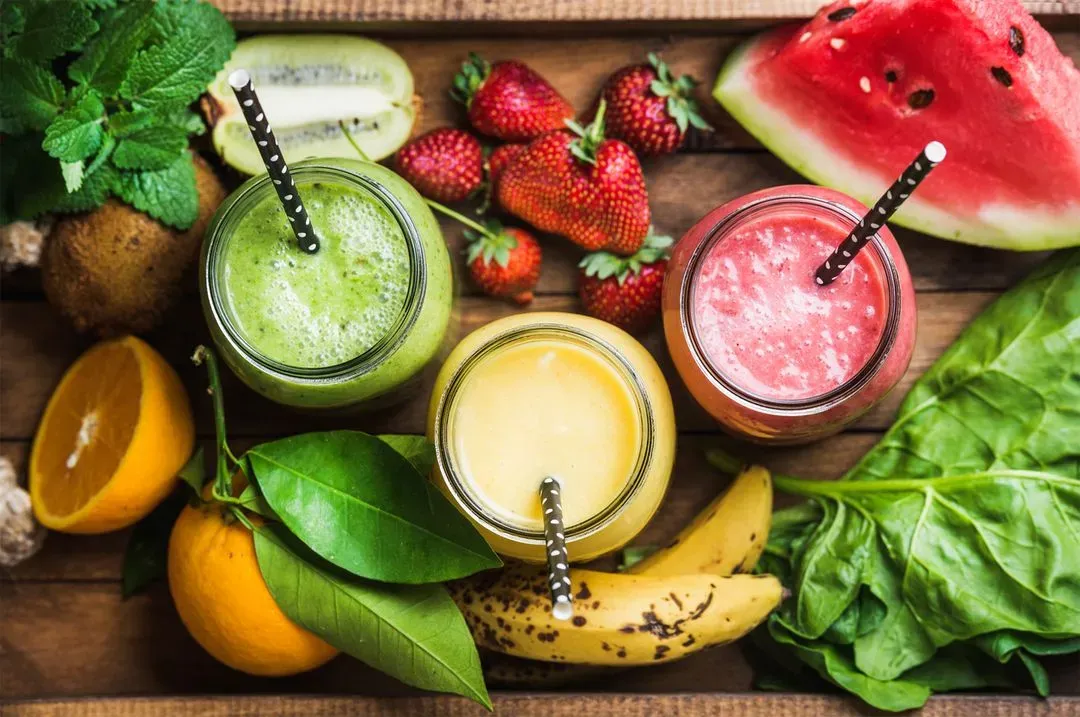
5. Green Smoothie
A smoothie can be a great way to get a serving of fruits and vegetables first thing in the morning.
Start with a liquid base of milk, water, or plant-based milk.
Add a protein source, such as protein powder or nut butter.
Next, add your fruits and veggies.
Most fresh fruits and vegetables are low on the glycemic index scale because of their fiber content.
Examples include:
- Cherries.
- Leafy greens.
- Blackberries.
- Blueberries.
- Strawberries.
- Avocado.
{{splash}}
6. Peanut Butter Toast With Apple
For a quick breakfast, try peanut butter on whole wheat toast.
Top with thinly sliced apples and a sprinkle of cinnamon for some natural sweetness and flavor.
Be sure to look for all-natural peanut butter which does not contain added sugars, oils, and fats.
If you prefer, you can add banana slices instead.
Bananas have a higher glycemic index than apples but are still considered a low-GI food.
7. Tofu Scramble With Veggies
Tofu is a great low-glycemic protein alternative for breakfast if you don't like eggs.
Make a “tofu scramble” by crumbling a block of tofu and sauteeing it with seasonings like garlic powder, salt, and nutritional yeast.
You can add other low-glycemic ingredients, such as spinach, mushrooms, pinto beans, and avocado, to balance this meal.
Serve with a side of whole wheat toast or wrap in a whole grain tortilla.
8. Baked Oatmeal
Baked oatmeal is a delicious low-glycemic breakfast you can prepare in advance.
Mix all the ingredients together, pour into a baking dish, and bake until firm.
The primary ingredients to include are:
- Old-fashioned oats.
- Milk.
- Egg or ground flax seeds.
- Baking powder.
- Fruit, such as berries or apples.
- Nuts or nut butter.
- Spices, like cinnamon, nutmeg, or pumpkin spice.
9. Egg Bites
Simply crack an egg into each compartment of a muffin tin, mix in veggies and cheese, and bake!
Egg bites are a great low-glycemic index breakfast and make a complete meal when paired with a high-fiber carbohydrate like whole wheat toast.
You can also add cooked quinoa to your egg bites before baking for an all-in-one balanced breakfast.
10. Black Bean Breakfast Tacos
Try breakfast tacos for a low-prep and blood sugar-friendly meal.
Add sautéed black beans, zucchini, mushrooms, and onions to corn tortillas.
Top with salsa, avocado, and cilantro.
If you prefer a higher protein breakfast, you can add options like:
- Lean ground beef.
- Shredded chicken.
- Scrambled eggs or tofu.
What Does Low-Glycemic Mean?
The glycemic index (GI) is a scale that measures how quickly different carbohydrates will impact your blood sugar levels.
Each food is given a rating from zero to 100:
- Low GI: 55 or less.
- Moderate GI: 56-69.
- High GI: 70 or higher.
High-GI foods are quickly digested and can make blood sugar levels increase rapidly.
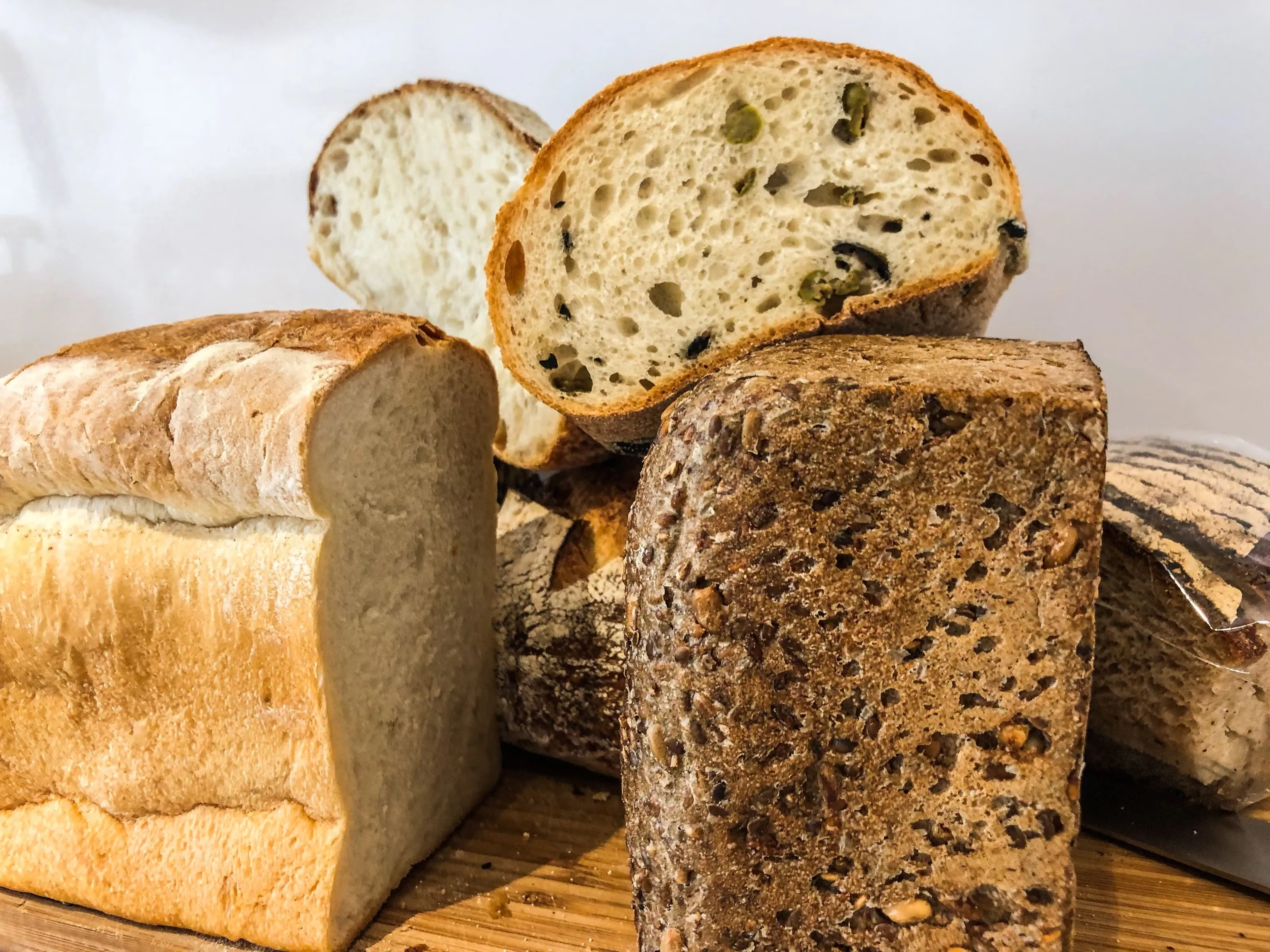
These foods are usually low in fiber, like white bread.
Low-GI foods digest much slower and gradually enter the bloodstream, which decreases their impact on blood glucose levels.
High-fiber foods like whole grains, beans, and most fruits have a low glycemic index.
Foods that do not contain any carbohydrates have a glycemic index of zero, such as eggs and meat.
Glycemic Load
Glycemic load (GL) is a separate measurement that may be helpful to consider when making food choices.
While the glycemic index represents how quickly a food will impact blood sugar levels, the glycemic load notes how much a food will raise blood sugar levels.
Though the glycemic index and glycemic load can be helpful tools, experts recommend considering other factors, too, like the balance of macronutrients in your meal and portion sizes.
Benefits of Low Glycemic Breakfast Foods
Typical American breakfast foods, from donuts to white bread to bagels, are high on the glycemic index scale.
Making swaps to reduce the glycemic index and load of your morning meal can support healthy blood sugar levels and help you meet your daily fiber needs.
Research shows that eating a low-glycemic breakfast meal results in lower blood sugar levels 1-2 hours after eating compared to a high-GI breakfast.
Additionally, a small study from 2015 found that consuming a low-GI breakfast and afternoon snack reduces 24-hour blood sugar levels significantly as well as lowering calorie intake at subsequent meals.
Because low-glycemic foods tend to be high in fiber, a low-GI breakfast contains over double the fiber of a high-GI meal.
This can help you start the day with a meal that keeps you full longer.
Tips for Incorporating Low-Glycemic Breakfast Foods into Your Routine
To get started with a low glycemic diet, make higher fiber swaps for typical breakfast foods.
For example, you can substitute:
- Whole grain bread instead of white bread.
- Steel cut or old-fashioned oats instead of quick oats.
- A whole grain bagel instead of a white bagel.
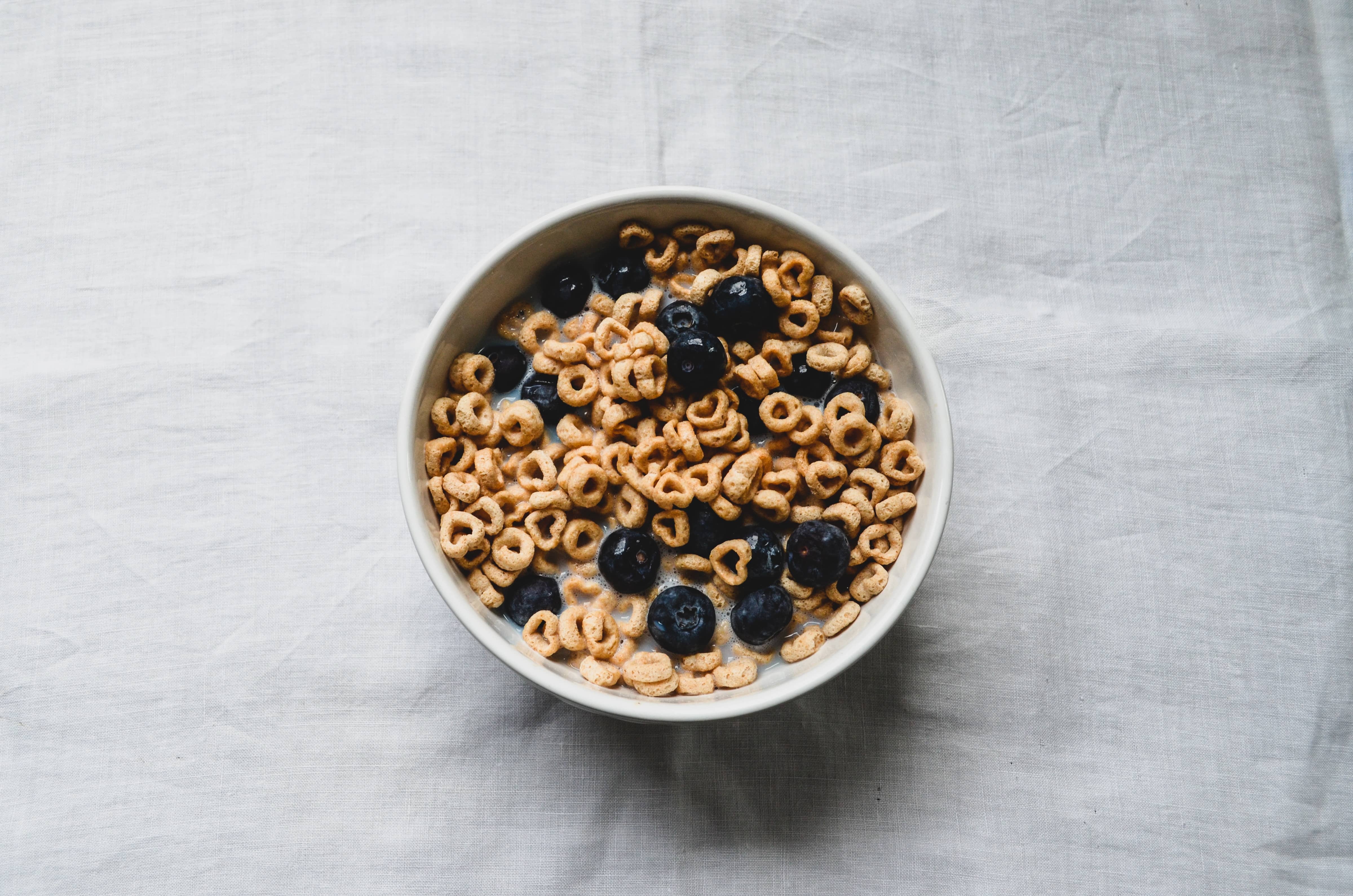
- Bran cereal instead of sugary cereal.
In general, try to emphasize whole foods for breakfast.
Preparing your morning meal at home is the best way to accomplish this.
If time is a barrier, try low-GI breakfast recipes that work well for meal prep, such as:
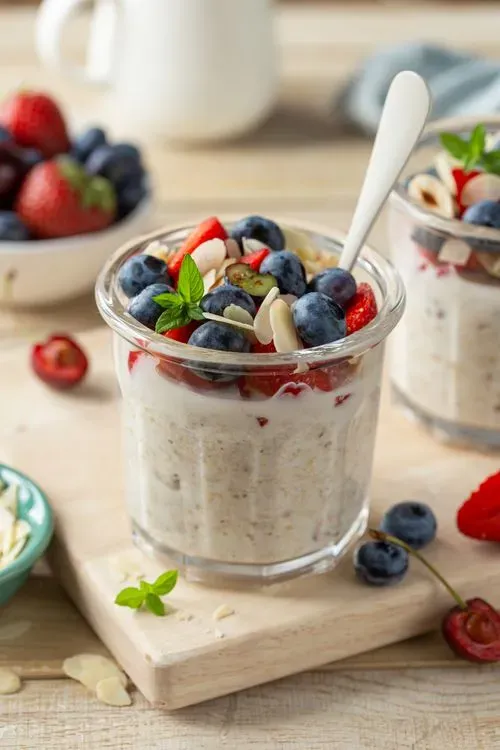
- Overnight oats.
- Egg bites.
- Baked oatmeal.
- Freezer breakfast burritos.
{{splash}}
Who Should Monitor Glycemic Index?
Paying attention to the glycemic index of the foods you eat can be helpful if you have diabetes.
Research shows that focusing on low-GI, high-fiber meals is a beneficial strategy for blood sugar management.
Other metabolic conditions may also benefit from low glycemic index meals, such as:
- Polycystic ovarian syndrome (PCOS).
- Overweight or obesity.
- Heart disease.
However, many studies are conflicting, and more research is needed to fully understand the role of glycemic index in these conditions.
Remember that glycemic index is only one piece of the puzzle when it comes to a nutritious diet.
Avoid an all-or-nothing mindset (“I can only eat low-GI foods”) and include all the macronutrients for a balanced breakfast.
Takeaway
The glycemic index (GI) measures how quickly a given food will increase your blood sugar levels.
Though GI is only one part of balanced nutrition, it can be a helpful way to choose foods that are blood-sugar friendly if you have diabetes or another metabolic condition.
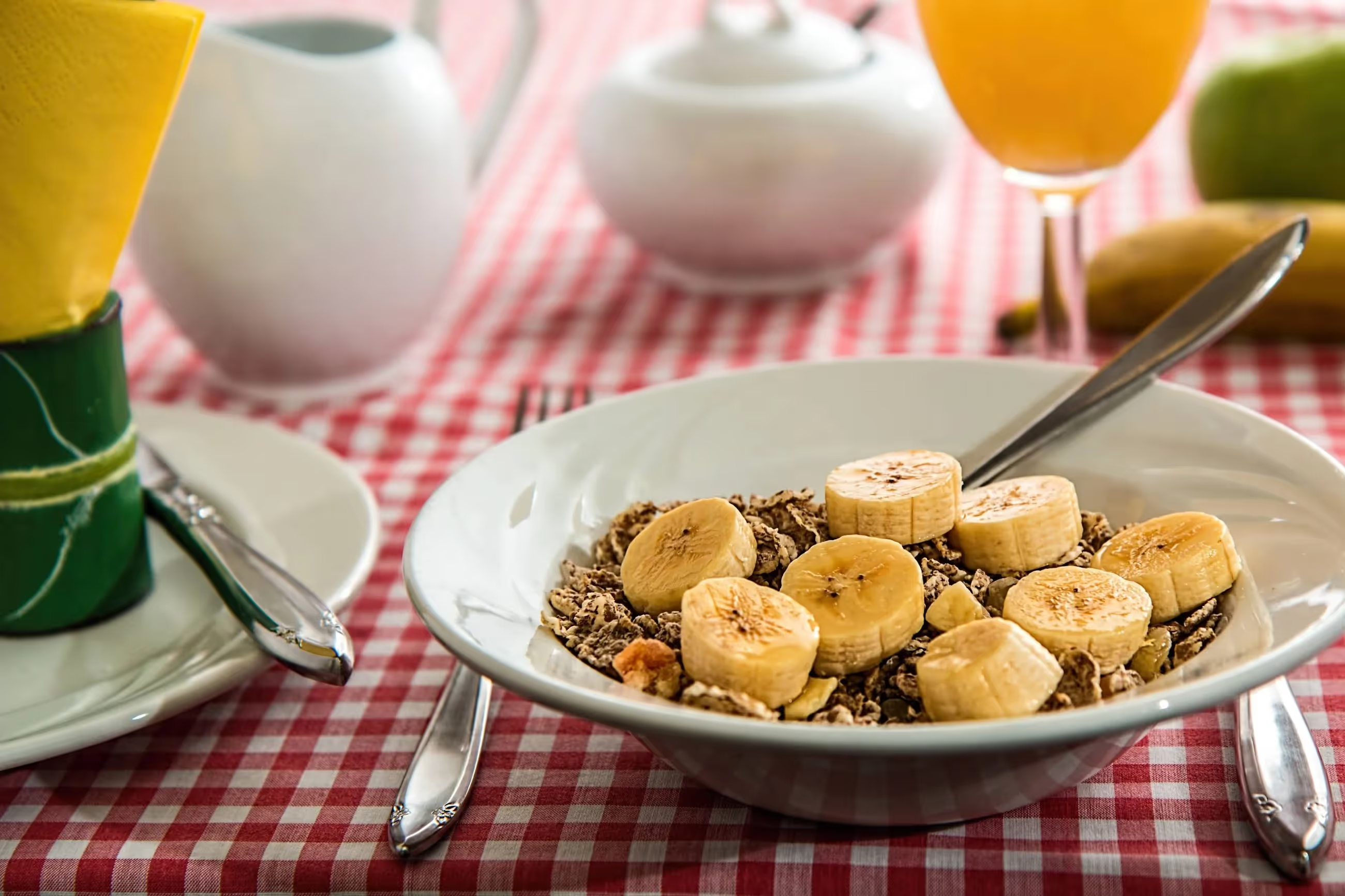
Start your day with a low glycemic breakfast by including ingredients like steel-cut oats, berries, apples, whole grain bread, eggs, tofu, and beans.
How a Dietitian Can Help
Learning which foods are the best for your blood sugar levels can be challenging.
A registered dietitian can guide you in using the glycemic index and other tools to build nourishing, balanced meals in a sustainable way.
Find a registered dietitian through Nourish for one-on-one support in meeting your health and nutrition goals.
Frequently Asked Questions
What are some low-glycemic breakfast foods?
Eating a low-glycemic breakfast is linked with better blood sugar levels after eating.
Low GI foods are also high in fiber, which can help you feel full longer.
Focus on building breakfast meals from the following low-glycemic ingredients:
- Eggs.
- Greek yogurt.
- Steel-cut oats.
- Apples.
- Berries.
- Cherries.
- Leafy greens.
- Whole grain bread.
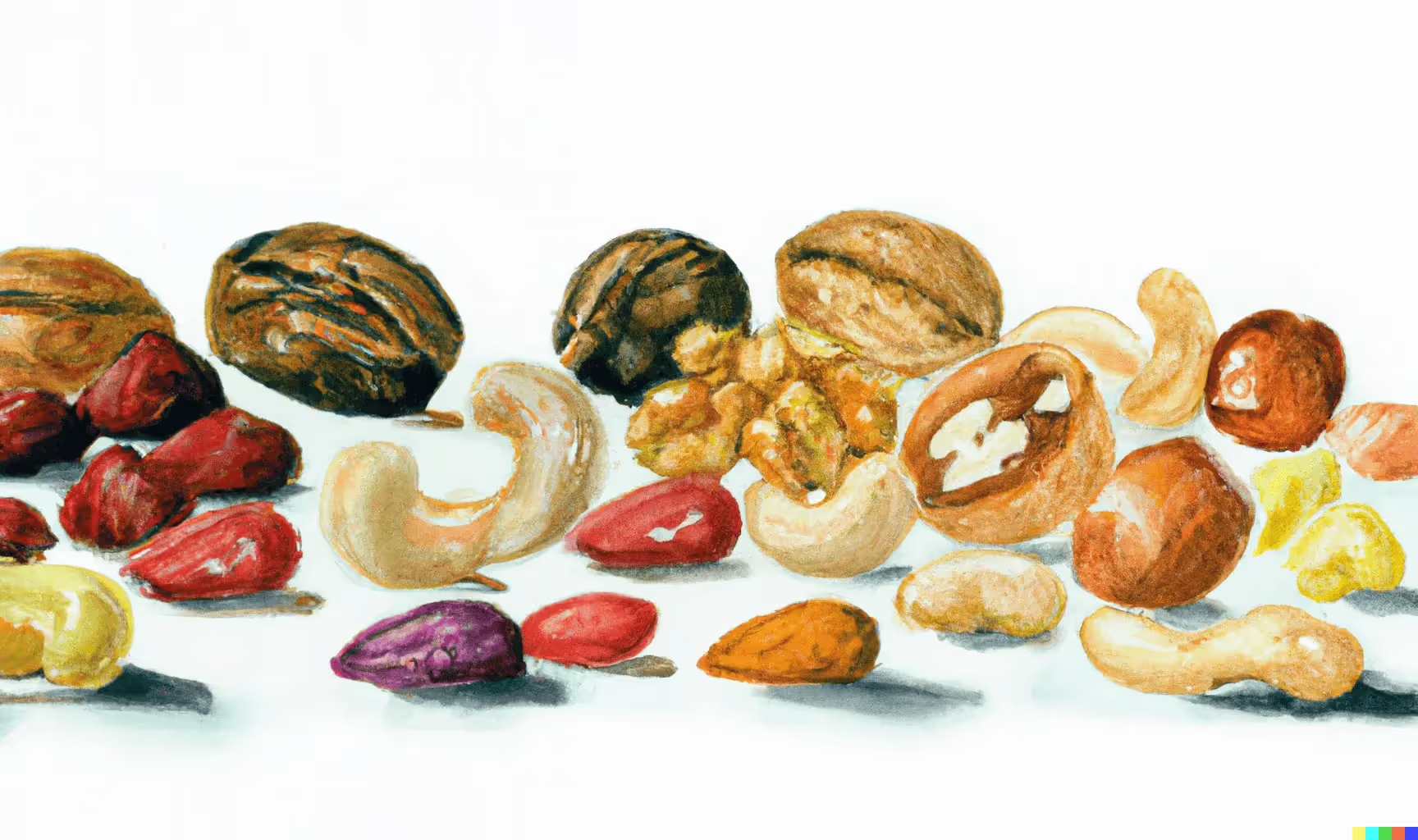
- Nuts and nut butter.
- Avocado.
- Whole grain or corn tortillas.
What can I eat for breakfast that won't raise my blood sugar?
Focus on high-fiber, low-glycemic index foods to keep your blood sugar balanced after eating.
Including protein, starch, and fat in your meal can also be helpful.
Consider the following examples:
- Steel-cut oats made with milk and topped with blueberries and walnuts.
- Baked egg and veggie cups with whole-grain toast.
- Breakfast burrito with eggs, cheese, sauteed veggies, pinto beans, and avocado in a whole wheat tortilla.
- Yogurt parfait with unsweetened Greek yogurt, mixed berries, and bran flakes.
What breakfast foods have a high glycemic index?
Foods that are highly processed or made with white flour tend to be lower in fiber and have a higher glycemic index.
This means they will raise your blood sugar levels quickly after eating.
Examples of high-glycemic breakfast foods include:
- Donuts.
- White bread.
- White bagels.
- Flour tortillas.
- Instant oatmeal.
- Pancakes and waffles made with white flour.
- Sugary cereal.
References
View all references
- Vega-López, S., Venn, B. J., & Slavin, J. L. (2018). Relevance of the Glycemic Index and Glycemic Load for Body Weight, Diabetes, and Cardiovascular Disease. Nutrients, 10(10).
- Saadati, N., Haidari, F., Barati, M., Nikbakht, R., Mirmomeni, G., & Rahim, F. (2021). The effect of low glycemic index diet on the reproductive and clinical profile in women with polycystic ovarian syndrome: A systematic review and meta-analysis. Heliyon, 7(11).
Nourish has strict sourcing policies and prioritizes primary sources, including medical organizations, governmental agencies, academic institutions, and peer-reviewed scientific journals. Learn more about our medical review process and editorial guidelines.







.avif)




%20(1).webp)

.avif)



.avif)








.avif)








































.avif)

.avif)