Is White Rice Good for Weight Loss?

Medical Reviewer: Christine Russell, MS, RD, LD, CDCES

Author: Sarah Glinski, RD

Summary
- Cooked and cooled white rice is high in resistant starch, which may aid weight loss.
- White rice is a versatile grain that combines with many foods to create a balanced meal.
- Whole grain alternatives include quinoa, farro, bulgur, wild rice, amaranth, and millet.
White rice is a staple food in several different cuisines, yet many weight loss plans eliminate it.
This can make weight loss plans feel challenging for people who have grown up eating white rice daily to follow.
Fortunately, there is some evidence that white rice can be included as part of a healthy weight loss plan.
Read on to learn about the nutrition content of white rice, its pros and cons as part of a weight loss plan, whole grain alternatives to white rice, and tips for including white rice and whole grains in a weight loss plan.
{{splash}}
Is White Rice Good for Weight Loss?
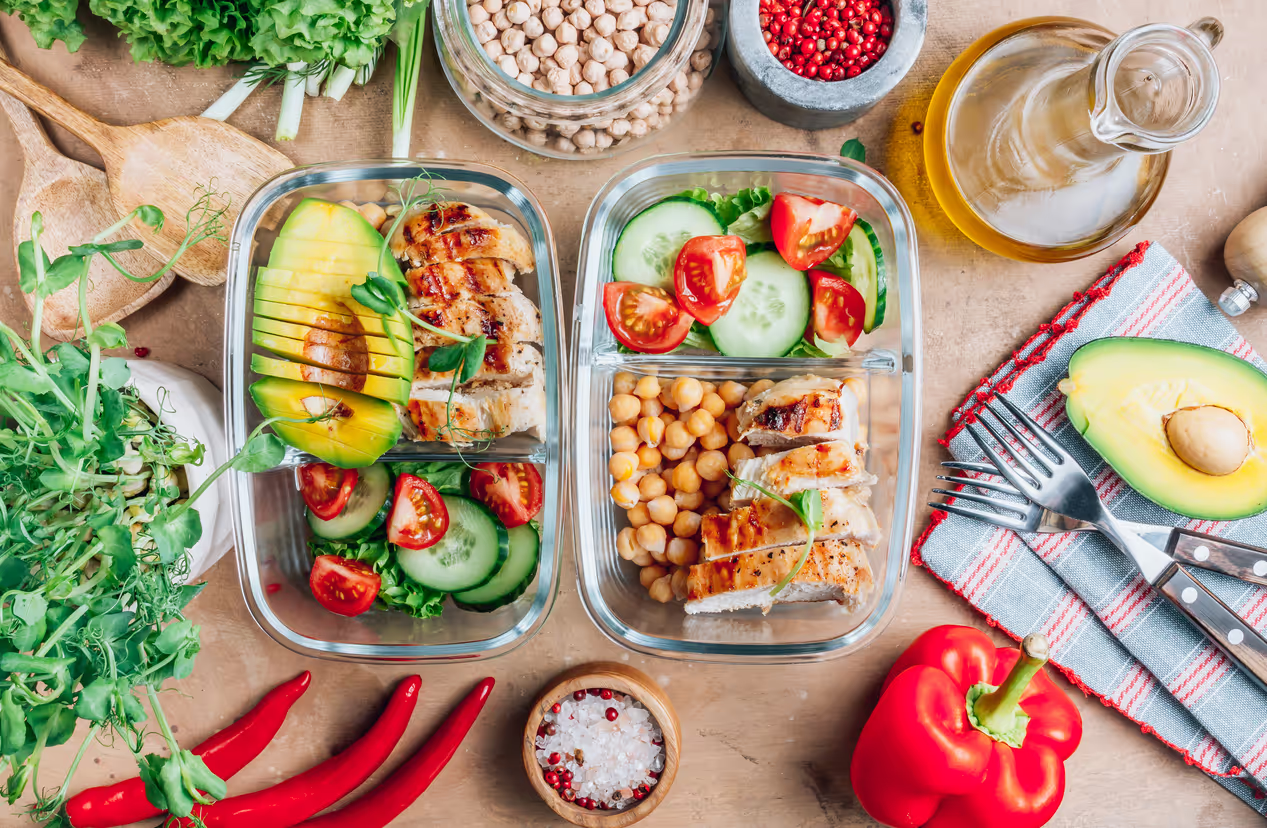
While white rice alone may not be beneficial for weight loss, pairing it with a healthy source of protein and fiber can make it part of a balanced diet for losing weight.
In addition, cooked and cooled white rice may help with weight loss because of its resistant starch content.
Resistant starch is not digested by the body but is instead fermented by gut bacteria in the large intestine.
A 2015 study comparing regular white rice to cooked and cooled white rice found that cooked and cooled white rice (reheated before being eaten) had less effect on blood sugar levels. Other studies suggest that resistant starch may help with weight management.
Therefore, when including white rice in your weight loss plan, consider cooking and cooling it before eating it to increase its resistant starch content.
You don’t have to eat it cold, either – the 2015 study reheated the cooled rice before eating it and saw the same benefits.
Nutritional Content of White Rice
According to the USDA, one cup of white, long-grain, unenriched, cooked rice contains the following:
Calories: 205
Protein: 4.3 g
Fat: 0.4 g
Carbohydrates: 44.6 g (Sugar: 0.1 g; Fiber: 0.6 g)
While unenriched white rice contains low levels of most vitamins and minerals, enriched white rice contains B vitamins and iron.
White rice is lower in fiber than brown rice, which contains about three grams of fiber per one cup of cooked rice.
Benefits of Including White Rice in Your Weight Loss Plan
There are several benefits of including white rice in your weight loss plan.
White rice is naturally low in fat and sodium, which can help you maintain a lower calorie intake and manage blood pressure while trying to lose weight.
In addition, since white rice is lower in fiber than whole grains, people with digestive sensitivities may find it easier to digest.
White rice pairs well with a variety of different foods and can be used to help create balanced meals.
When paired with fiber-rich and protein-rich foods, it can promote satiety. Because white rice is typically affordable, it’s accessible to people from a wide range of economic backgrounds.
Finally, the high carbohydrate content of white rice means it can provide a quick burst of energy, which can be useful for people engaging in frequent physical activity to support their weight loss goals.
Potential Drawbacks and Considerations
While white rice can be part of a healthy weight loss plan, there are some drawbacks and considerations to be aware of.
First, white rice is lower in fiber than whole grains like brown rice.
Fiber helps promote a feeling of satiety (fullness) and slows digestion.
The lower fiber content of white rice may lead to feeling hungry sooner, which could result in eating larger portions or more snacks than if you were to choose a higher fiber whole grain.
White rice is also lower in vitamins, minerals, and phytochemicals (beneficial plant compounds) than whole grains because it lacks the outer bran layer.
Making white rice your grain of choice means you’re missing out on the health benefits of whole grains, such as a reduced risk of developing type 2 diabetes, heart disease, and certain types of cancer.
Since a weight loss plan typically involves reducing portion sizes, eating nutrient-dense foods like whole grains is key to ensuring you continue getting the nutrients you need, even if you’re eating less overall.
White Rice vs. Brown Rice: Which is Better for Weight Loss?
A 2018 study comparing the effects of brown rice versus white rice on stomach emptying times found that whole-grain brown rice emptied from the stomach more slowly, which could promote a better feeling of fullness and reduce blood sugar spikes.
This effect is likely due to the presence of the outer bran layer, which is rich in fiber.
Since promoting satiety may help people stick to a reduced-calorie diet, this suggests that brown rice may be better for weight loss than white rice.
However, it’s also important to consider individual preferences when creating a weight loss plan.
If you strongly dislike brown rice, you may not feel satisfied when you eat it despite the higher fiber content.
In this case, eating white rice may be better for your weight loss plan because you find it more satisfying from a taste perspective, which could lead to reduced cravings overall.
Can I Eat White Rice Every Day?
While there’s nothing wrong with eating white rice daily, it’s important to balance it with other grains, especially whole grains.
The USDA recommends that at least half the grains you eat be whole grains like whole wheat, bulgur (cracked wheat), brown rice, quinoa, farro, and oatmeal.
How Much White Rice Should I Eat in a Serving?
The USDA recommends that adult women get between five and eight ounce-equivalent servings of grains daily, while adult men should get between six and ten ounce-equivalent servings of grains daily.
An ounce-equivalent serving of rice is half a cup of cooked rice.
If you divide your grain recommendations over three meals, that’s equivalent to about one to one-and-a-half cups of rice in a serving.
However, everyone has different nutritional needs.
For a more individualized recommendation, speak with a registered dietitian.
White Rice Alternatives for Weight Loss
While white rice can be part of a healthy weight loss plan, it’s important to include a variety of different grains for overall health.
Here are a few white rice alternatives to try.
Quinoa
Although quinoa is slightly higher in calories than white rice, it is rich in protein and fiber to promote a feeling of fullness.
It’s also a complete protein, containing all nine essential amino acids (the building blocks of protein).
Farro
Farro is a type of wheat that is rich in fiber and protein.
Its chewy texture makes it filling, and it's also a good source of iron.
Since people with overweight and obesity often have lower iron levels, getting enough iron in a weight loss plan is important.
Bulgur
Commonly used in Mediterranean diets, bulgur is a whole grain wheat that’s lower in calories than white rice and contains more fiber, helping with satiety and digestion. It’s also rich in iron, magnesium, and phosphorus.
Wild Rice
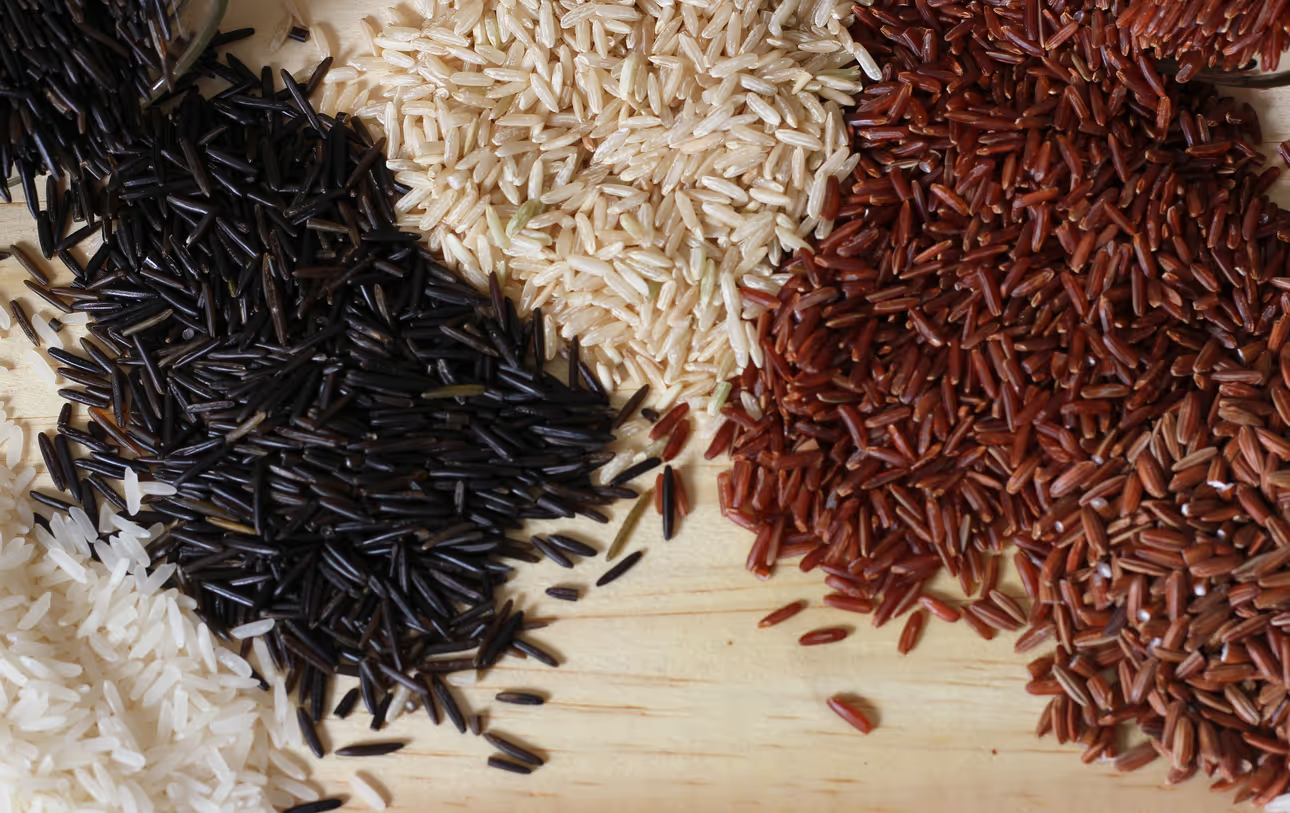
While wild rice is technically a grass, it’s higher in protein and fiber than white rice, which can help you feel full for longer.
It’s also rich in antioxidants and minerals like zinc, magnesium, and phosphorus.
Amaranth
Amaranth is a gluten-free grain that’s high in protein and fiber, which can help stabilize blood sugars and promote fullness.
It’s also a good source of iron.
Millet
Millet is a small, gluten-free grain that’s higher in protein and fiber than white rice.
Its slightly nutty flavor makes it a versatile white rice substitute.
RD-Approved Ways to Enjoy Rice and Other Grains for Weight Loss
While many people turn to low-carbohydrate diets to lose weight, it is possible to enjoy rice and other whole grains as part of a weight-loss plan.
Here are some meals that incorporate these healthy grains.
White Rice Stir-Fry with Tofu and Vegetables
Pair enriched white rice with sautéed tofu, vegetables like bell peppers, broccoli, and carrots, garlic, and ginger.
Thanks to the vegetables, this meal is high in fiber, vitamins, and minerals.
The tofu provides plant-based protein, making this meal a filling choice.
Quinoa Salad with Grilled Chicken and Avocado
Combine quinoa with grilled chicken breast, sliced avocado, cherry tomatoes, and a dressing made with minced garlic, lemon juice, and olive oil. This salad is packed with protein and healthy fats, making it a choice that will keep you full for hours.
Farro, Kale, and Chickpea Salad
Mix cooked farro with kale, roasted chickpeas, a small handful of cranberries, and a tahini (sesame seed paste) dressing.
While this meal doesn’t contain meat, it’s still high in protein thanks to the farro and chickpeas, making it a great option for those following a plant-based diet.
{{splash}}
Ground Turkey and White Rice Stuffed Peppers
Stuff bell peppers with ground turkey, enriched white rice, black beans, and tomatoes.
Top with a sprinkle of mozzarella cheese for a filling, balanced, and nutrient-dense meal.
Takeaway
White rice can be part of a weight loss plan, especially if it's cooked and then cooled before eating it, which increases its resistant starch content.
While white rice is lower in nutrients than many whole grains, pairing it with a source of protein, healthy fats, and fiber can help ensure your meals are balanced.
How a Dietitian Can Help
If you’re unsure how to incorporate white rice into your weight loss plan, a registered dietitian can help.
They will consider your goals, cooking skills, and taste preferences when designing a personalized weight loss plan.
A registered dietitian can also teach you how to use different whole grains so you have more variety in your diet.
You can find a dietitian who accepts insurance through Nourish.
Frequently Asked Questions
Can I eat white rice and still lose weight?
Yes, you can eat white rice and still lose weight.
However, rather than eating white rice plain, it’s best to combine it with a source of protein and a source of fiber to ensure it keeps you full for longer
Is rice good for losing belly fat?
No single food promotes spot reduction or weight loss from a specific body part. However, studies indicate that eating brown rice may help with overall weight loss. In addition, white rice that has been cooked and cooled may promote weight loss due to its high resistant starch content.
Which rice is best for weight loss?
All types of rice can be part of a weight loss plan.
White rice that has been cooked and cooled is high in resistant starch, which studies show may help with weight loss.
Plus, other studies show that brown rice may help with weight loss. Pair rice with a source of protein and fiber for a balanced meal.
References
View all references
- Sonia, S., Witjaksono, F., & Ridwan, R. (2015). Effect of cooling of cooked white rice on resistant starch content and glycemic response. Asia Pacific Journal of Clinical Nutrition, 24(4), 620–625. https://doi.org/10.6133/apjcn.2015.24.4.13
- Bojarczuk, A., Skąpska, S., Mousavi Khaneghah, A., & Marszałek, K. (2022). Health benefits of resistant starch: A review of the literature. Journal of Functional Foods, 93, 105094. https://doi.org/10.1016/j.jff.2022.105094
- U. S. Department of Agriculture. FoodData Central. (April 1, 2019). Rice, white, long-grain, regular, unenriched, cooked without salt. Retrieved September 19, 2024, from https://fdc.nal.usda.gov/fdc-app.html#/food-details/169757/nutrients
- U. S. Department of Agriculture. FoodData Central. (April 1, 2019). Rice, white, long-grain, regular, enriched, cooked. Retrieved September 19, 2024, from https://fdc.nal.usda.gov/fdc-app.html#/food-details/168878/nutrients
- U. S. Department of Agriculture. FoodData Central. (April 1, 2019). Rice, brown, long-grain, cooked. Retrieved September 19, 2024, from https://fdc.nal.usda.gov/fdc-app.html#/food-details/169704/nutrients
- Capuano E. (2017). The behavior of dietary fiber in the gastrointestinal tract determines its physiological effect. Critical Reviews in Food Science and Nutrition, 57(16), 3543–3564. https://doi.org/10.1080/10408398.2016.1180501
- McRae M. P. (2017). Health Benefits of Dietary Whole Grains: An Umbrella Review of Meta-analyses. Journal of Chiropractic Medicine, 16(1), 10–18. https://www.ncbi.nlm.nih.gov/pmc/articles/PMC5310957/
- Pletsch, E. A., & Hamaker, B. R. (2018). Brown rice compared to white rice slows gastric emptying in humans. European Journal of Clinical Nutrition, 72(3), 367–373. https://doi.org/10.1038/s41430-017-0003-z
- U. S. Department of Agriculture. MyPlate. (n.d.). Grains. Retrieved September 19, 2024, from https://www.myplate.gov/eat-healthy/grains
- U. S. Department of Agriculture. FoodData Central. (April 1, 2019). Quinoa, cooked. Retrieved September 19, 2024, from https://fdc.nal.usda.gov/fdc-app.html#/food-details/168917/nutrients
- Craine, E. B., & Murphy, K. M. (2020). Seed Composition and Amino Acid Profiles for Quinoa Grown in Washington State. Frontiers in Nutrition, 7. https://doi.org/10.3389/fnut.2020.00126
- U. S. Department of Agriculture. FoodData Central. (October 26, 2023). Farro. Retrieved September 19, 2024, from https://fdc.nal.usda.gov/fdc-app.html#/food-details/2659627/nutrients
- Alshwaiyat, N. M., Ahmad, A., Wan Hassan, W. M. R., & Al-Jamal, H. A. N. (2021). Association between obesity and iron deficiency (Review). Experimental and Therapeutic Medicine, 22(5), 1268. https://doi.org/10.3892/etm.2021.10703
- U. S. Department of Agriculture. FoodData Central. (April 1, 2019). Bulgur, cooked. Retrieved September 19, 2024, from https://fdc.nal.usda.gov/fdc-app.html#/food-details/170287/nutrients
- U. S. Department of Agriculture. FoodData Central. (April 1, 2019). Wild rice, cooked. Retrieved September 19, 2024, from https://fdc.nal.usda.gov/fdc-app.html#/food-details/168897/nutrients
- U. S. Department of Agriculture. FoodData Central. (April 1, 2019). Amaranth grain, cooked. Retrieved September 19, 2024, from https://fdc.nal.usda.gov/fdc-app.html#/food-details/170683/nutrients
- U. S. Department of Agriculture. FoodData Central. (April 1, 2019). Millet, cooked. Retrieved September 19, 2024, from https://fdc.nal.usda.gov/fdc-app.html#/food-details/168871/nutrients
- Araki, R., Ushio, R., Fujie, K., Ueyama, Y., Suzuki, H., Nakata, Y., & Hashimoto, K. (2017). Effect of partially-abraded brown rice consumption on body weight and the indicators of glucose and lipid metabolism in pre-diabetic adults: A randomized controlled trial. Clinical Nutrition ESPEN, 19, 9-15. https://doi.org/10.1016/j.clnesp.2017.01.015
- Thompson, M. S., Hui Yan, T., Saari, N., & Sarbini, S. R. (2022). A review: Resistant starch, a promising prebiotic for obesity and weight management. Food Bioscience, 50, 101965. https://doi.org/10.1016/j.fbio.2022.101965
- Hawley, J. A., & Leckey, J. J. (2015). Carbohydrate Dependence During Prolonged, Intense Endurance Exercise. Sports Medicine (Auckland, N.z.), 45(Suppl 1), 5-12. https://doi.org/10.1007/s40279-015-0400-1
- Ryckman, T., Beal, T., Nordhagen, S., Murira, Z., & Torlesse, H. (2021). Affordability of nutritious foods for complementary feeding in South Asia. Nutrition Reviews, 79(Suppl 1), 52-68. https://doi.org/10.1093/nutrit/nuaa139
Nourish has strict sourcing policies and prioritizes primary sources, including medical organizations, governmental agencies, academic institutions, and peer-reviewed scientific journals. Learn more about our medical review process and editorial guidelines.
More articles
%201%20(1).jpg)


.avif)












.avif)
















.avif)















.avif)







.avif)
.avif)










.avif)
.avif)