Should I Count Calories Or Carbs To Lose Weight?

Medical Reviewer: Blair Kott, MDA, RD, LD

Author: Jennifer Huddy, MS, RD, LD

Summary
- Calorie counting is a weight loss strategy where you eat fewer calories than you burn.
- Carb counting is touted as an alternative that restricts carbohydrates instead of calories.
- Both methods may result in short-term weight loss but have long-term limitations regarding weight maintenance.
If you’re on a weight management journey, you may feel overwhelmed by all the different diet strategies–keto, low-calorie, intermittent fasting, tracking macros, and more.
Two popular weight loss methods are calorie-counting and carbohydrate-counting.
Both can be effective in the short term, but each has pros and cons.
Continue reading to learn whether you should count calories or carbs to lose weight.
What are Calories and Carbohydrates?
A calorie is a unit of measurement that tells you how much energy a given food will provide your body with.
When you eat, your body converts the calories from food into energy.
The energy is used to fuel your body in everyday activities, and the excess can be stored as fat.
Carbohydrates are one of the three main macronutrients (along with protein and fat) that we get from food.
Carbohydrates provide four calories per gram. When you eat carbohydrates, your body breaks them down into glucose (sugar), which is the main source of energy for your cells. Glucose can also be stored for later use.
There are several different types of carbohydrates:
- Sugars are simple carbohydrates found naturally in foods like fruit and milk and are added to foods like desserts and sodas.
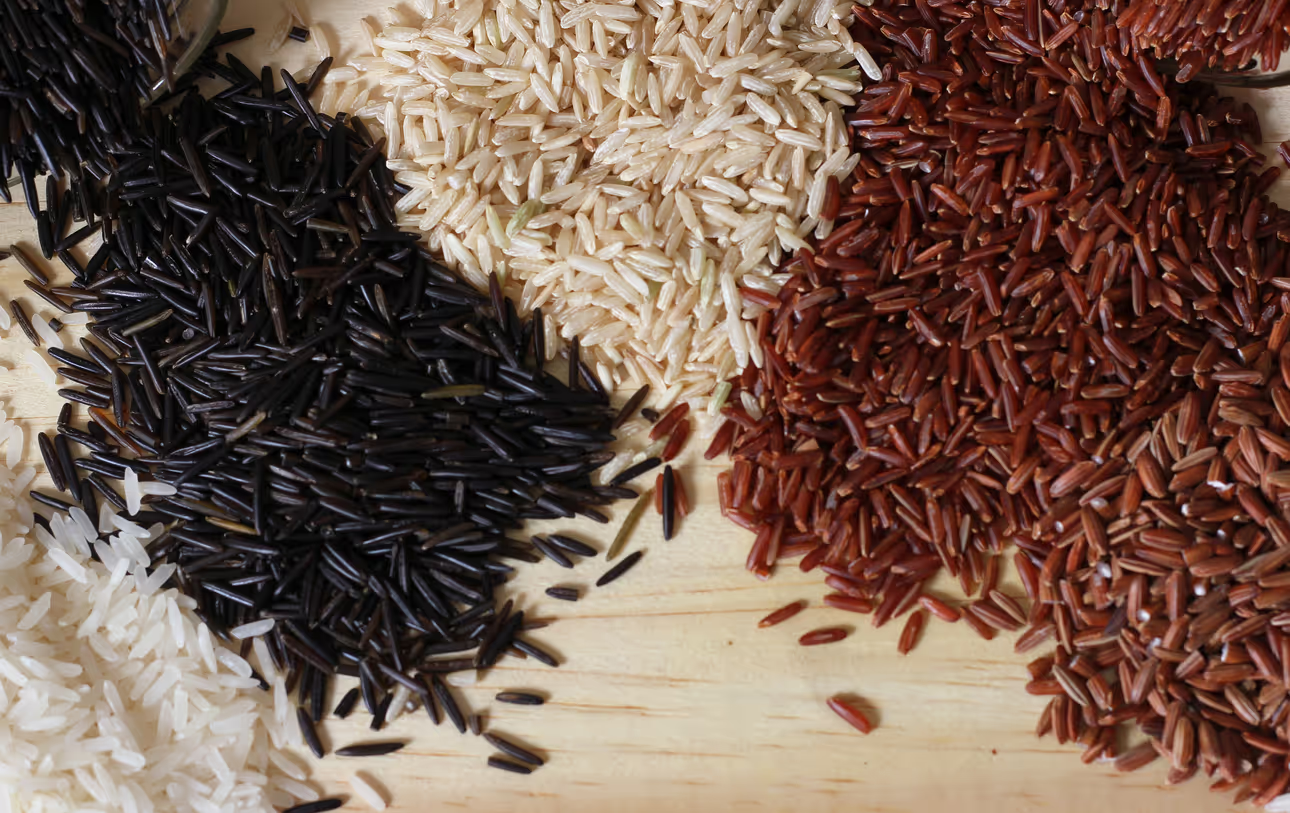
- Starches are complex carbohydrates made from a long chain of sugars and include bread, potatoes, and rice. These take your body more time to break down.
- Fiber is an indigestible component of certain carbohydrates, such as whole grains, legumes, and fruit. Fiber can help you stay full, minimize blood sugar spikes, and promote healthy digestion.
How Do They Impact Weight Loss?
Let’s take a look at the role calories and carbohydrates play in weight management.
Calories
Eating fewer calories than your body needs creates an energy deficit, which may cause your body to burn fat stores for energy, resulting in weight loss.
This principle of “calories in versus calories out” is popular in many weight loss diets. It states that:
- Eating fewer calories than you burn equals weight loss.
- Eating more calories than you burn equals weight gain.
However, human metabolism is complex and has mechanisms in place to compensate for restricted calorie intake.
One of these is to slow the metabolic rate, which may cause weight loss plateaus and weight regain.
Carbohydrates
The carbohydrate-insulin model (CIM) is a theory about the role carbohydrates may play in weight management.
This theory states that a diet high in carbohydrates (especially refined carbs and added sugars) increases insulin levels in the body, which may promote fat storage and weight gain.
People following this approach may restrict the total amount of carbohydrates they consume, replacing these with fat and protein.
However, some research contradicts this, showing that people can lose weight following various macronutrient distributions, including low-fat, higher-carb diets.
While low-carb diets can be an effective short-term strategy for weight loss, more research is needed to understand whether the carbohydrate-insulin model is valid.
Calorie Counting vs. Carb Counting
Calorie counting typically involves tracking your daily calorie intake, aiming for a calorie deficit of around 500 calories per day.
However, individual calorie goals can vary depending on your goals and health status.
On the other hand, carbohydrate counting involves tracking your daily carbohydrate intake.
There are several different goals a person may have while carb-counting:
- Low-carb diet (10-45% of total calories from carbohydrates).
- Very low-carb diet (<10% of total calories from carbohydrates).
Reduced-carb diets may or may not involve a calorie deficit.
In some cases, the carbs are replaced by protein or fat. Some people follow a high-protein, low-carb diet, while others follow a high-fat, low-carb diet.
Pros and Cons
Let’s explore the pros and cons of calorie counting versus carb counting.
Pros of Calorie Counting
Calorie counting can be highly effective for weight loss in the short term. A daily 500-calorie deficit may lead to around one pound of weight loss per week.
Additionally, calorie counting can be a simple method to use, as it doesn’t require a focus on specific macronutrients, only total daily calories.
Cons of Calorie Counting
However, calorie counting can be time-consuming, and many calorie tracking methods (such as smartphone apps) may be inaccurate.
It also doesn't focus on the nutrient density of the foods you consume, only the overall calorie count.
More importantly, the human body has mechanisms in place to resist calorie restriction and weight loss.
Hormonal and metabolic changes can result in an increased appetite and reduced resting energy expenditure, which may promote weight regain in the long term.
Pros of Carb Counting
Carbohydrate counting offers an alternative to tracking calories.
Some people find it easier to focus on limiting one macronutrient instead of overall calories.
Carb counting may be especially beneficial for people with prediabetes or type 2 diabetes who are trying to manage their blood sugar levels and body weight.
Cons of Carb Counting
A limitation of carbohydrate counting is that it focuses on overall grams of carbohydrates rather than the quality of your carb choices.
It doesn’t differentiate between refined carbs and whole-grain high-fiber carbs.
Research on low-carbohydrate diets shows that they may not be effective or sustainable in the long term (over six months)
Restricting carbs may reduce your intake of key nutrients, including fiber, which may negatively impact your gut health and nutritional status.
Which Method is Best for Weight Loss?
Whether you choose to count calories or carbohydrates for weight management depends on which is most sustainable and effective for you.
A 2003 study compared a very low-carbohydrate diet (no calorie restriction) with a low-fat, low-calorie diet and found comparable weight loss results at three and six months.
Other studies have compared different weight loss diets with varying calorie and macronutrient compositions (low-fat, low-carbohydrate, etc.) and have found that many options lead to comparable weight reduction.
Overall, research hasn’t identified one single dietary pattern that is superior for long-term weight management.
What Your Dietitian Wants You to Know
If you’re on a weight management journey, it's best to work with your dietitian to choose a plan that’s both realistic and sustainable for you.
Most dietitians are against highly restrictive calorie and macronutrient goals.
While these may be effective in the short term, they can become challenging to maintain over time.
Try making healthy swaps to reduce calories and improve the quality of your carbohydrates, prioritizing legumes, whole grains, and fruits instead of sugar-sweetened beverages, desserts, and fast food.
Tips for Losing Weight in a Healthy Way
Consider these tips for managing your weight without counting calories or carbs.
It can be valuable to work with a registered dietitian on implementing these strategies.
Focus on Nutrient-Dense Foods
To increase your diet's overall nutrient density, emphasize whole grains, lean proteins, healthy fats, fruits, and vegetables.
These foods are rich in fiber, vitamins, and minerals, which can help you stay satisfied on your weight management plan.
Listen to Your Body's Hunger and Fullness Cues
Practice intuitive eating strategies to guide your eating, such as honoring your body’s natural hunger and fullness signals.
Practice checking in with your appetite signals throughout the day, and try to avoid becoming overly hungry or full.
Be Mindful of Portion Sizes
If you’re trying to lose weight and prefer not to count calories, being aware of your portion sizes may be helpful.
Read nutrition labels and try to balance your meals using the plate method: ¼ plate of lean protein, ¼ plate of high-fiber carbs, and ½ plate of fruits and vegetables.
Takeaway
Calorie counting and low-carb diets (carb counting) can both be effective ways to lose weight in the short term.
However, long-term weight management is more complex and may involve other strategies.
Work with your healthcare team to identify the most sustainable weight management plan for you.
How a Dietitian Can Help
A registered dietitian can help you with your weight management goals by creating an individualized plan and helping you set realistic, sustainable goals.
During your sessions, your dietitian may help you:
- Determine if tracking calories or macronutrients is right for you.
- Listen to your hunger and fullness cues.
- Balance your meals and choose nutrient-dense foods.
- Overcome emotional eating.
- Engage in regular exercise habits.
Find a dietitian specializing in weight management to help you meet your health goals and feel your best.
Frequently Asked Questions
Is it better to cut calories or carbs to lose weight?
A low-calorie diet is the standard recommendation for weight loss.
Research shows that a low-carb diet (without calorie counting) may also be effective in the short term.
Many different diet strategies are effective for short-term weight loss.
Work with your doctor and dietitian to identify the best plan for you.
How many carbs should I eat a day to lose weight?
There is not one carbohydrate goal that’s most effective for weight loss.
Research shows that people can lose weight on a variety of carbohydrate amounts when following a calorie deficit.
The recommended amount of carbohydrates for healthy adults is 45-65% of total daily calories.
People following a low-carb diet may restrict carbs to 10-45% of daily calories, while very low-carb diets advise less than 10% of daily calories from carbs.
Which carbs should I avoid to lose weight?
Try to limit refined carbs and added sugars while on a weight management plan.
These can be found in foods like:
- White bread, white rice, and white pasta.
- Fast food.
- Desserts.
- Sugar-sweetened beverages.
- Packaged foods, like chips, donuts, and cookies.
Instead, focus on high-fiber, nutrient-dense carbohydrates, including:
- Whole grains, such as brown rice, barley, and oats.
- Beans, peas, and legumes.
- Fruits and vegetables
References
View all references
Nourish has strict sourcing policies and prioritizes primary sources, including medical organizations, governmental agencies, academic institutions, and peer-reviewed scientific journals. Learn more about our medical review process and editorial guidelines.
More articles
%201%20(1).jpg)


.avif)














.avif)

















.avif)















.avif)







.avif)
.avif)










.avif)
.avif)