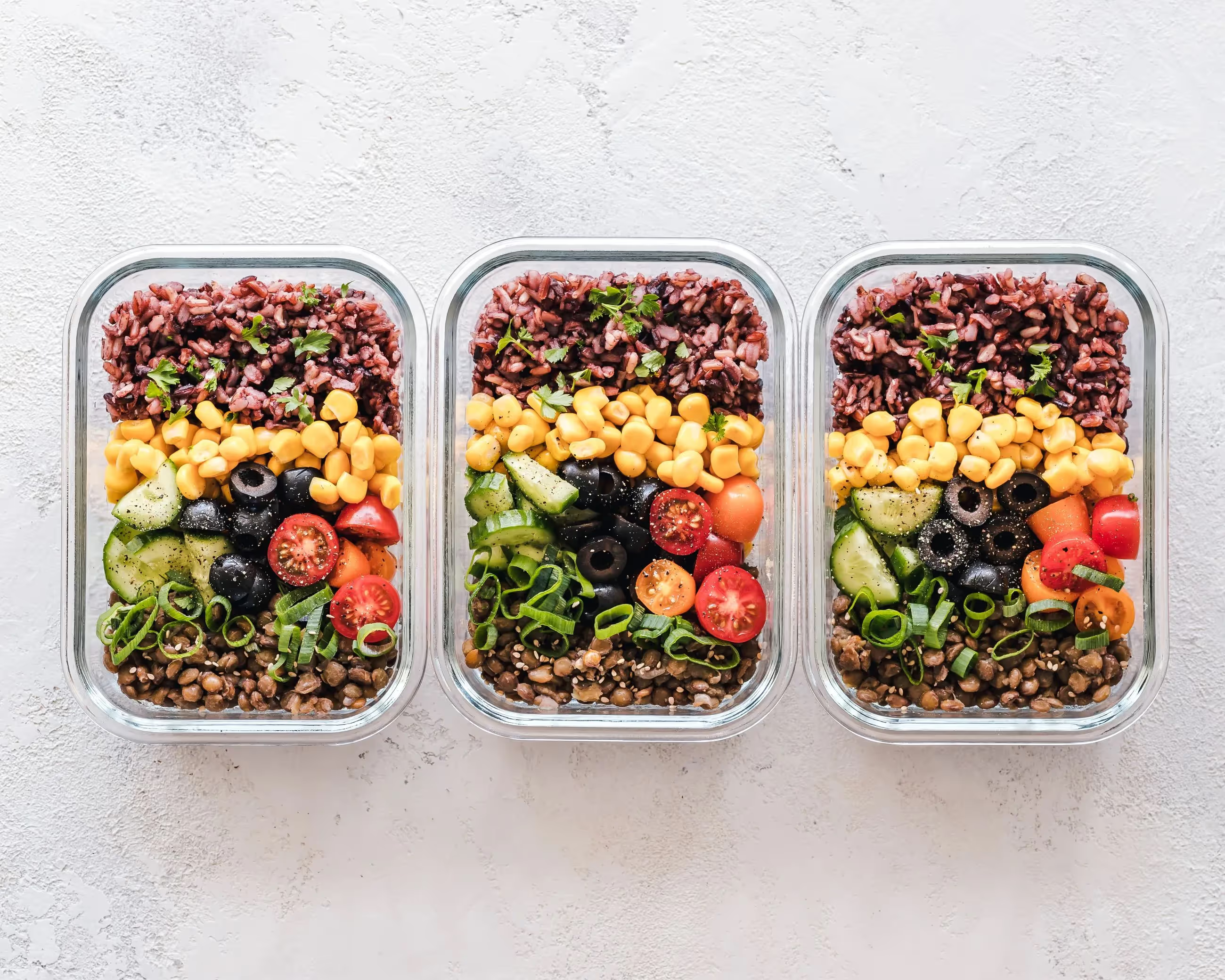
7-Day Metabolic Confusion Meal Plan

Medical Reviewer: Sarah Hormachea, MS, RD, CDCES, BC-ADM

Author: Ashley Petrie, RDN, LDN

Summary
- The metabolic confusion diet is an eating pattern for weight loss that involves alternating between high- and low-calorie days.
- Limited evidence suggests that the metabolic confusion diet may help maintain a higher resting metabolic rate during weight loss, but this approach could be more sustainable in the long term when compared to a traditional calorie-restricted diet.
- Despite limited evidence, if you’re interested in this approach to weight loss, we’ve created this free 7-day meal plan for you to try. It features a variety of healthy meals and snacks combining lean proteins, whole grains, fruits, and vegetables.
The metabolic confusion diet, also known as calorie cycling or calorie shifting, aims to prevent your metabolism from slowing down during weight loss.
On this diet, you alternate between high-calorie and low-calorie days.
Proponents of the metabolic confusion diet claim that cycling your daily calorie intake keeps your metabolism active and prevents your body from adapting to a low-calorie diet. This diet's flexible eating pattern is also thought to be more sustainable long term.
Keep in mind that your metabolism will decrease naturally as your body adjusts to being at a lower body weight.
There is no specific diet plan you need to follow for the metabolic confusion diet other than cycling your daily calorie intake.
Calorie amounts, food types, and high- or low-calorie days will vary for each person.
Keep reading to learn more about the metabolic confusion diet and decide if it’s right for you. Then, try our free 7-day metabolic diet meal plan.
{{splash}}
What Is Metabolic Confusion?
The metabolic confusion diet involves alternating between high-calorie and low-calorie days as a method for losing weight.
This can be done on alternate days or weeks, using a 5:2 day split, or other variations.
For example, someone who maintains their weight at 2,500 calories a day might alternate between 1,400 and 2,000 calories a day, every other day, on the metabolic confusion diet.
The goal is to prevent your metabolism from adapting to a consistent low-calorie intake, which can slow down weight loss.
It can also potentially improve long-term adherence to a weight loss plan because it offers greater flexibility.
In a 2014 study, researchers compared a calorie-shifting diet with a traditional calorie-restricted diet over six weeks.
They found that the 37 participants on the calorie-shifting diet maintained a higher resting metabolic rate and were less likely to experience weight regain during the follow-up period.
Additionally, participants' adherence was higher in the calorie-shifting diet group than in the calorie-restricted diet group.
While this study's results are promising, it is limited in the number of participants and length of the study.
Further research is needed to determine whether the metabolic confusion diet genuinely affects metabolism or is simply an alternative method for achieving a calorie deficit for weight loss.
What to Eat on the Metabolic Confusion Diet
There are no foods that are off-limits on the metabolic confusion diet.
As long as you stay within your calorie guidelines, you can include whatever foods you typically enjoy eating.
However, it’s best to prioritize a healthy, balanced diet by incorporating the following foods:
- Lean proteins, like skinless chicken or turkey, fish, eggs, and tofu.
- Beans and legumes (dried or canned).
- Vegetables (fresh, frozen, or canned).
- Fruits (fresh, frozen, or canned).
- Whole grains, such as whole wheat bread, whole wheat pasta, oatmeal, brown rice, quinoa, and farro.
- Nuts and seeds (raw or roasted, lightly salted or unsalted).
- Low-fat dairy products or dairy alternatives.
- Healthy fats, including olive oil and avocados.
Including a variety of nutrient-dense foods in your diet ensures you’re meeting your nutritional needs as you lose weight.
Metabolic Confusion Meal Plan
Here is a sample 7-day meal plan for the metabolic confusion diet for an individual who needs 2,150 calories for weight maintenance and is interested in losing about one pound per week.
Always consult with a healthcare professional before starting any new weight loss diet.
They can help you determine your specific calorie needs and ensure you’re within a safe, healthy, and acceptable range.
Ask your dietitian for recommendations regarding specific food preferences and serving sizes.
Day 1 (1,400 calories)
- Breakfast: Plain Greek yogurt with mixed berries and a drizzle of honey.
- Lunch: Grilled chicken breast over mixed salad greens with a light vinaigrette dressing.
- Dinner: Baked salmon with steamed broccoli and brown rice.
- Snacks: Cucumber slices and carrot sticks with hummus.
Day 2 (2,000 calories)
- Breakfast: Omelette with spinach, mushrooms, and feta cheese on whole wheat toast.
- Lunch: Turkey and avocado wheat wrap with a side of fresh fruit.
- Dinner: Whole wheat spaghetti with turkey meatballs and a side salad.
- Snacks: Protein powder fruit smoothie and a handful of roasted nuts.
Day 3 (1,400 calories)
- Breakfast: Oatmeal with low-fat milk and mixed berries.
- Lunch: Ground turkey and black bean stuffed bell peppers.
- Dinner: Grilled shrimp with roasted asparagus and brown rice.
- Snacks: Fresh orange slices and celery with peanut butter.
Day 4 (2,000 calories)
- Breakfast: Whole wheat pancakes with berry compôte and turkey bacon.
- Lunch: Leafy green salad with grilled chicken breast, hard-boiled eggs, avocado, tomatoes, and blue cheese dressing.
- Dinner: Beef stir-fry with mushrooms, carrots, and snap peas over brown rice noodles.
- Snacks: Greek yogurt granola parfait and a handful of dried fruit and nut trail mix.
Day 5 (1,400 calories)
- Breakfast: A fruit smoothie made with low-fat milk, banana, berries, and spinach.
- Lunch: Mediterranean chickpea salad with cucumber, cherry tomatoes, and a light vinaigrette dressing.
- Dinner: Baked split chicken breast (no skin) with roasted Brussels sprouts and diced sweet potatoes.
- Snacks: Apple with peanut butter.
Day 6 (2,000 calories)
- Breakfast: Scrambled eggs and low-fat cheese over whole wheat toast with diced avocado and mixed berries.
- Lunch: Grilled chicken breast burrito bowl with brown rice, guacamole, and salsa.
- Dinner: Broiled cod with mashed potatoes and steamed green beans.
- Snacks: A protein shake and whole grain crackers with hummus.
Day 7 (1,400 calories)
- Breakfast: Scrambled egg whites with spinach and feta cheese on whole wheat toast.
- Lunch: Vegetable soup made with cannellini beans.
- Dinner: Teriyaki ground turkey and brown rice lettuce wraps.
- Snacks: A handful of almonds and fresh fruit.
Is the Metabolic Confusion Diet Safe?
The metabolic confusion diet is likely safe for most people trying to lose weight.
However, it's important to consult your healthcare provider before starting a weight loss diet to determine an appropriate calorie deficit range for your needs.
Individuals with certain medical conditions or dietary restrictions should avoid starting the metabolic confusion diet without consulting a healthcare professional.
These may include individuals with diabetes, eating disorders, or those who are pregnant or breastfeeding.
Tips for Deciding if Metabolic Confusion Is Right for You
The decision to try the metabolic confusion diet is a personal one.
It should always be based on your individual health needs, preferences, and goals.
Here are some tips for deciding if metabolic confusion is right for you:
Talk to Your Healthcare Provider
Discussing your plan to begin a new weight-loss diet with your care provider is critical.
Your care provider can help you determine if the metabolic confusion diet is appropriate for you based on your medical history, current medications, and any underlying health conditions.
They can also monitor your weight loss progress on the metabolic confusion diet and address any potential health concerns that arise.
Consider Your Lifestyle
Lifestyle factors should also be considered when deciding if a diet is right for you.
Consider if alternating high- and low-calorie days fits your lifestyle and preferences.
If you prefer a more structured approach or struggle with changing calorie intake, this method may not be suitable for you.
Additionally, think about how the diet fits into your daily routine and how social events and eating out may be impacted.
For successful weight loss, choose a diet that suits your lifestyle and is sustainable in the long term.
Assess Your Relationship With Food
Reflect on your relationship with food and how you respond to dietary restrictions or changes.
If you have a history of disordered eating or struggle with food-related stress, it's imperative to approach any new diet plan with caution and support from professionals.
Think About Long-Term Sustainability
Think about whether you can stick to the metabolic confusion diet in the long run.
While the metabolic confusion diet offers greater flexibility in calorie intake than a traditional calorie-restricted diet, it still requires tracking total daily calories.
Remembering which days you can eat more or less may also be challenging for some.
The key to successful weight loss is developing healthy eating habits and choosing a diet plan that works well for you.
Monitor Your Progress
If you try the metabolic confusion diet, be sure to monitor how your body responds.
Note any changes in weight, energy levels, hunger cues, and how you feel overall.
Talk to your dietitian or doctor if you experience any negative effects or find the diet hard to maintain.
You may need to reassess and consider alternative approaches.
{{splash}}
Takeaway
The metabolic confusion diet provides an alternative to traditional calorie-restricted diets for weight loss.
It offers greater flexibility in daily calorie intake, which may help increase long-term adherence to the diet.
It’s also thought that this diet may keep your metabolism active during weight loss and prevent weight regain, but further studies are needed to confirm this.
We've designed this 7-day metabolic confusion meal plan for weight loss to show you how calorie cycling works and help you decide if it’s right for you.
For more individualized support, consider working with a weight loss dietitian.
Work With a Dietitian
If you’re unsure about how the metabolic confusion diet works, consider working with a registered dietitian.
A registered dietitian can support your weight loss goals with personalized advice tailored to your food preferences, lifestyle, and health needs.
They'll figure out an appropriate calorie deficit for you and help you plan your high- and low-calorie days.
Find a weight loss dietitian who accepts insurance through Nourish and can help you decide if the metabolic confusion diet is right for you.
Frequently Asked Questions
References
View all references
- Calorie shifting diet versus calorie restriction diet: a comparative clinical trial study. (2014, April 1). PubMed.
- Judge, A., & Dodd, M. S. (2020). Metabolism. Essays in Biochemistry, 64(4), 607–647.
- Most, J., & Redman, L. M. (2020). Impact of calorie restriction on energy metabolism in humans. Experimental Gerontology, 133, 110875.
- McNab, B. K. (2019). What determines the basal rate of metabolism? Journal of Experimental Biology.
- Hall, K. D., & Kahan, S. (2018). Maintenance of lost weight and Long-Term management of obesity. Medical Clinics of North America/the Medical Clinics of North America, 102(1), 183–197.
- Osilla, E. V., Safadi, A. O., & Sharma, S. (2022, September 12). Calories. StatPearls - NCBI Bookshelf.
- Healthy eating for adults | MyPlate. (n.d.).
- NCI Dictionary of Cancer Terms. (n.d.). Cancer.gov.
- Atkinson, R. L., & Kaiser, D. L. (1985). Effects of calorie restriction and weight loss on glucose and insulin levels in obese humans. Journal of the American College of Nutrition, 4(4), 411–419.
- Stewart, T. M., Martin, C. K., & Williamson, D. A. (2022). The Complicated Relationship between Dieting, Dietary Restraint, Caloric Restriction, and Eating Disorders: Is a Shift in Public Health Messaging Warranted? International Journal of Environmental Research and Public Health/International Journal of Environmental Research and Public Health, 19(1), 491.
- Eating right during pregnancy: MedlinePlus Medical Encyclopedia. (n.d.).
- Koliaki, C., Spinos, T., Spinou, Μ., Brinia, Μ., Mitsopoulou, D., & Katsilambros, N. (2018). Defining the optimal dietary approach for safe, effective and sustainable weight loss in overweight and obese adults. Healthcare, 6(3), 73.
Nourish has strict sourcing policies and prioritizes primary sources, including medical organizations, governmental agencies, academic institutions, and peer-reviewed scientific journals. Learn more about our medical review process and editorial guidelines.