Bipolar and Binge Eating: Are They Connected?

Medical Reviewer: Christine Russell, MS, RD, LD, CDCES

Author: Caitlin Beale, MS, RDN

Summary
- People with bipolar disorder may be at higher risk for binge eating behaviors and binge eating disorders.
- Impulsivity associated with bipolar disorder can influence binge eating.
- Treatment for bipolar and binge eating may include medication, psychotherapy, and nutritional counseling.
Bipolar disorder (BD) is a mental health condition that causes extreme shifts in mood, energy, and behavior. It affects around 4.4% of U.S. adults and nearly 3% of adolescents. People living with bipolar disorder often experience comorbidities (having two or more medical conditions at the same time)—including binge eating behaviors and binge eating disorder (BED).
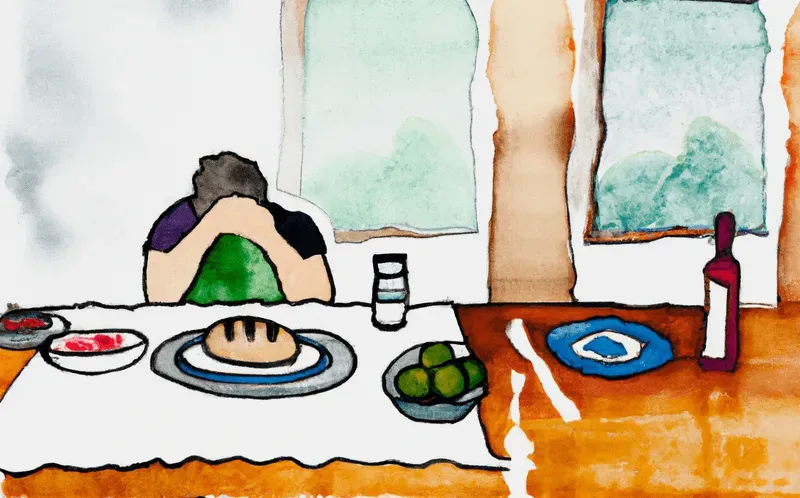
Someone with binge eating behaviors may have a pattern of eating large amounts of food in short periods and feeling out of control during the behavior. Those with a BED diagnosis engage in these behaviors at least once a week for over three months and experience severe distress or shame after binges.
Bipolar disorder and binge eating have more in common than you think, as they share some of the same potential root causes. This article will explore the link between bipolar disorder and binge eating disorder and provide advice on how to find support for both.
{{splash}}
Are Bipolar Disease and Binge Eating Connected?
Studies suggest that people with bipolar disorder are more likely to experience binge eating behaviors, or BED, than those without the condition.
Research on mood disorders suggests that up to 25% of those living with bipolar have a BED diagnosis, and nearly 30% of people with BD experience binge eating behaviors (with or without the BED diagnosis). A systematic review found that almost 10% of people diagnosed with BED also had bipolar.
Impulsivity May Help Explain the Connection Between Bipolar and Binge Eating
While the reason for the relationship between bipolar disorder and binge eating is not yet well understood, it is believed to be related to changes in impulse control. Food becomes a way to manage emotions, impulsivity, and anxiety in both conditions.
The two common types of bipolar are:
- Bipolar I: Bipolar I is characterized by cycles of depression, hypomania, and manic episodes. Manic episodes are periods of high-energy behavior severe enough to significantly impair day-to-day life, lasting a week or more and often requiring hospitalization. Hypomania is a milder version of a manic episode that’s still characterized by a period of high energy and impulsivity, but it doesn’t last as long.
- Bipolar II: Like bipolar I, bipolar II is characterized by depression and hypomania but without severe manic episodes.
Impulse control is a significant challenge for those struggling with binge eating behaviors and BED, where mania causes impulsive actions. Additionally, when someone is in a depressive episode, they may turn to food to cope with or soothe their distress. People with BED are often triggered by emotions, and these feelings can be intensified in those with bipolar disorder.
"Understanding the link between bipolar disorder and binge eating hinges on the role of impulsivity. In both conditions, food becomes a coping mechanism for managing emotions and anxiety. This interplay underscores the importance of addressing impulse control in treatment strategies," explains Dr. Caroline Fenkel, Chief Clinical Officer and Co-Founder at Charlie Health.
Impulsivity and BED are also linked, as someone with BED is often disconnected from hunger or satiety cues and feels out of control while eating.
What Causes Bipolar and Binge Eating?
Bipolar and BED are mental health conditions with complex causes that are not fully understood.
There’s no single cause for either disorder, and many factors may contribute, including:
- Emotional regulation: Emotions and food are often closely intertwined for many people. It’s common for anyone—not just those with BED or BD—to eat as a way to self-soothe when feeling overwhelmed or distressed. At a minimum, food represents comfort and distraction from difficult emotions or depression. It also may provide temporary relief by producing brain chemicals that promote feelings of calm or even pleasure. For people with BED, food can become a primary coping mechanism, especially if they don’t have access to appropriate support. But food is also a cause of deep anguish after binging episodes, so the cycle can be particularly destructive.
- Genetics: BED and BD are significantly associated with hereditary factors, so individuals may be predisposed to developing either disorder. Research suggests that heritability for BD is estimated at 60–85% and 46–74% for BE. This means someone with a close relative diagnosed with either disorder is more likely to develop it themselves.
Interestingly, research has found that both conditions may share a specific gene variation. Variations in the PRR5-ARHGA gene have been associated with both BD and BED. At the same time, another study looked at a possible connection between bipolar, binge eating behaviors, and the apoprotein B gene.
More research is needed to confirm the findings, but they suggest the intriguing possibility of a common genetic link between the two conditions.
- Medications: Side effects from some types of medicine used to treat BD can cause weight gain and increase episodes of compulsive eating. In this case, the eating behavior has less to do with impulsivity and more with a disconnect of actual hunger or satiety signals from the brain. It’s important to note that medications can be lifesaving for people with BD, so it’s essential to have a conversation with your doctor if you’re experiencing side effects to explore all your options.
- Environmental Factors: Trauma and adverse childhood experiences (ACEs) may increase the risk of BD, and some studies suggest these factors also may play a role in the development of BED. Other environmental factors, like parental or peer relationships, hyperfocus on body size and image, or growing up in a home where guardians modeled dieting behavior may influence BED, especially in combination with genetics.
Treatment for Bipolar and Binge Eating
Treatment for both bipolar and BED differ, but there can be some overlap in treatment approaches. In order to determine the best approach, it is essential to seek professional advice from a medical doctor, therapist, and dietitian who can help diagnose and manage both conditions.
Bipolar Treatment
Medication, psychotherapy, and lifestyle changes are all cornerstones of treatment for bipolar disorder. Depending on the severity of symptoms, medication may include mood stabilizers, antidepressant medications, antipsychotics, and other medications.
Psychotherapy for BD can include cognitive behavior therapy, group therapy, and family-based therapy. Each depends on the individual’s needs and preferences. Additionally, lifestyle habits focusing on sleep, diet, exercise, and overall well-being can help manage symptoms of BD, but this requires a close, individualized approach between you and your care team.
Binge Eating Treatment
BED treatment may include medication, psychotherapy, dietary changes, and lifestyle modifications.
Psychotherapy, such as cognitive behavior therapy (CBT), can help individuals gain insight into their eating habits and develop new strategies for dealing with difficult emotions. Additionally, addressing underlying issues such as trauma or body image can help individuals manage the symptoms of BED.
Finally, working with a registered dietitian or nutritionist can help create a balanced eating plan and regain insight into hunger, fullness, and healthy eating patterns.
{{splash}}
Getting Help
Bipolar and binge eating disorders are closely linked, and the underlying causes are complex and often intertwined. Treatment should take a holistic approach focusing on nutrition, mental health, and lifestyle habits to manage symptoms.
Consider booking an appointment with a nutritionist for binge eating disorder. Visits are covered by most popular insurance providers, and the virtual option makes getting the help you need from anywhere easy.
Find a dietitian near you that accepts insurance through Nourish.
Frequently Asked Questions
References
View all references
- Bipolar Disorder. (n.d.). National Institute of Mental Health (NIMH). https://www.nimh.nih.gov/health/statistics/bipolar-disorder
- Boulanger, H., Tebeka, S., Girod, C., Lloret-Linares, C., Meheust, J., Scott, J., Guillaume, S., Courtet, P., Bellivier, F., & Delavest, M. (2018). Binge eating behaviours in bipolar disorders. Journal of affective disorders, 225, 482–488.
- Berkman, N. D. (n.d.). Table 1, DSM-IV and DSM-5 diagnostic criteria for binge-eating disorder - Management and Outcomes of Binge-Eating Disorder - NCBI Bookshelf.
- Woldeyohannes, H. O., Soczynska, J. K., Maruschak, N. A., Syeda, K., Wium-Andersen, I. K., Lee, Y., Cha, D. S., Xiao, H. X., Gallaugher, L. A., Dale, R. M., Alsuwaidan, M. T., Mansur, R. B., Muzina, D. J., Carvalho, A. F., Jerrell, J., Kennedy, S., & McIntyre, R. S. (2016). Binge eating in adults with mood disorders: Results from the International Mood Disorders Collaborative Project. Obesity research & clinical practice, 10(5), 531–543.
- McElroy, S. L., Crow, S., Blom, T. J., Cuellar-Barboza, A. B., Prieto, M. L., Veldic, M., Winham, S. J., Bobo, W. V., Geske, J., Seymour, L. R., Mori, N., Bond, D. J., Biernacka, J. M., & Frye, M. A. (2016). Clinical features of bipolar spectrum with binge eating behaviour. Journal of affective disorders, 201, 95–98.
- Fornaro, M., Daray, F. M., Hunter, F., Anastasia, A., Stubbs, B., De Berardis, D., Shin, J. I., Husain, M. I., Dragioti, E., Fusar-Poli, P., Solmi, M., Berk, M., Vieta, E., & Carvalho, A. F. (2021). The prevalence, odds and predictors of lifespan comorbid eating disorder among people with a primary diagnosis of bipolar disorders, and vice-versa: Systematic review and meta-analysis. Journal of affective disorders, 280(Pt A), 409–431.
- Tondo, L., Miola, A., Pinna, M., Contu, M., & Baldessarini, R. J. (2022). Differences between bipolar disorder types 1 and 2 support the DSM two-syndrome concept. International journal of bipolar disorders, 10(1), 21.
- Dingemans, A., Danner, U., & Parks, M. (2017). Emotion Regulation in Binge Eating Disorder: A Review. Nutrients, 9(11), 1274.
- Moore, C. F., Sabino, V., Koob, G. F., & Cottone, P. (2017). Pathological Overeating: Emerging Evidence for a Compulsivity Construct. Neuropsychopharmacology : official publication of the American College of Neuropsychopharmacology, 42(7), 1375–1389.
- Burton, A. L., & Abbott, M. J. (2019). Processes and pathways to binge eating: development of an integrated cognitive and behavioural model of binge eating. Journal of eating disorders, 7, 18
- McElroy, S. L., Winham, S. J., Cuellar-Barboza, A. B., Colby, C. L., Ho, A. M., Sicotte, H., Larrabee, B. R., Crow, S., Frye, M. A., & Biernacka, J. M. (2018). Bipolar disorder with binge eating behavior: a genome-wide association study implicates PRR5-ARHGAP8. Translational psychiatry, 8(1), 40.
- Yaramala, S. R., McElroy, S. L., Geske, J., Winham, S., Gao, K., Reilly-Harrington, N. A., Ketter, T. A., Deckersbach, T., Kinrys, G., Kamali, M., Sylvia, L. G., McInnis, M. G., Friedman, E. S., Thase, M. E., Kocsis, J. H., Tohen, M., Calabrese, J. R., Bowden, C. L., Shelton, R. C., Nierenberg, A. A., … Bobo, W. V. (2020). The impact of binge eating behavior on lithium- and quetiapine-associated changes in body weight, body mass index, and waist circumference during 6 months of treatment: Findings from the bipolar CHOICE study. Journal of affective disorders, 266, 772–781.
- Mukherjee, S., Skrede, S., Milbank, E., Andriantsitohaina, R., López, M., & Fernø, J. (2022). Understanding the Effects of Antipsychotics on Appetite Control. Frontiers in nutrition, 8, 815456.
- Park, Y. M., Shekhtman, T., & Kelsoe, J. R. (2020). Effect of the Type and Number of Adverse Childhood Experiences and the Timing of Adverse Experiences on Clinical Outcomes in Individuals with Bipolar Disorder. Brain sciences, 10(5), 254.
- Chu, J., Raney, J. H., Ganson, K. T., Wu, K., Rupanagunta, A., Testa, A., Jackson, D. B., Murray, S. B., & Nagata, J. M. (2022). Adverse childhood experiences and binge-eating disorder in early adolescents. Journal of eating disorders, 10(1), 168.
- Mazzeo, S. E., & Bulik, C. M. (2009). Environmental and genetic risk factors for eating disorders: what the clinician needs to know. Child and adolescent psychiatric clinics of North America, 18(1), 67–82.
- Shah, N., Grover, S., & Rao, G. P. (2017). Clinical Practice Guidelines for Management of Bipolar Disorder. Indian journal of psychiatry, 59(Suppl 1), S51–S66.
- Novick, D. M., & Swartz, H. A. (2019). Evidence-Based Psychotherapies for Bipolar Disorder. Focus (American Psychiatric Publishing), 17(3), 238–248.
- Bauer, I. E., Gálvez, J. F., Hamilton, J. E., Balanzá-Martínez, V., Zunta-Soares, G. B., Soares, J. C., & Meyer, T. D. (2016). Lifestyle interventions targeting dietary habits and exercise in bipolar disorder: A systematic review. Journal of psychiatric research, 74, 1–7.
- Brownley, K. A., Berkman, N. D., Peat, C. M., Lohr, K. N., Cullen, K. E., Bann, C. M., & Bulik, C. M. (2016). Binge-Eating Disorder in Adults: A Systematic Review and Meta-analysis. Annals of internal medicine, 165(6), 409–420.
- Burton, A. L., & Abbott, M. J. (2019). Processes and pathways to binge eating: development of an integrated cognitive and behavioural model of binge eating. Journal of eating disorders, 7, 18.
Nourish has strict sourcing policies and prioritizes primary sources, including medical organizations, governmental agencies, academic institutions, and peer-reviewed scientific journals. Learn more about our medical review process and editorial guidelines.
.avif)



.avif)


.avif)
.avif)