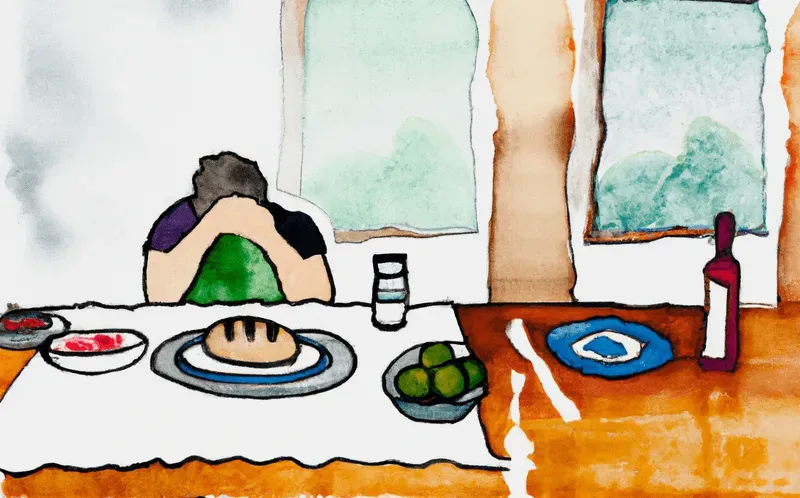
Why Does My Stomach Feel Empty Even Though I Ate?

Medical Reviewer: Christina Harris, RDN

Author: Julia Zakrzewski, RD

Summary
- If your stomach feels empty after eating, it may be related to eating too fast or your food choices, like not eating enough fiber or protein with your meal.
- Hunger right after eating can also be caused by high stress levels, poor sleep, and dysfunctions in the hormones that regulate appetite.
- Certain medical conditions and medications can impact hunger signals, making it difficult to know what your body really needs.
Updated by: Jennifer Huddy, MS, RD
You likely expect to feel full and satisfied after you take the last bite of your meal.
But sometimes, the hunger is still there, and you may wonder how that’s possible.
You still might have the sensation of an empty stomach after your meals for several reasons.
How satisfied you feel after eating can depend on your food choices, portion sizes, pace of eating, and lifestyle factors like sleep and stress.
Keep reading to learn why your stomach can still feel empty even though you just ate—and how to prevent this in the future.
{{splash}}
How Do I Feel Satisfied After Eating?
There are many factors involved in satiety, but tuning into your internal hunger and fullness cues is a good starting point if you frequently feel hungry after eating.
Your body has two hormones that actively regulate your appetite: ghrelin (hunger hormone) and leptin (satiety hormone).
Listening to and honoring these natural signals can take some practice.
Try thinking about your hunger and fullness on a scale from one to ten, with one being ravenous and ten being overly full.
Check in with your body before, during, and after meals to help guide your eating.
Take note of the times your stomach feels empty after eating a meal.
Try to notice any trends to see if these episodes have anything in common.
For example, this may always happen at breakfast time, indicating you might need to adjust portion sizes or food choices.
Factors Impacting Appetite Hormones
In some cases, your hunger and fullness cues may not be reliable signals.
Gaining weight and living with obesity can impair the functions of appetite-regulating hormones, making it harder to tell when you feel satisfied after eating.
Chronically ignoring your signals can also interfere with your ability to tune into your natural hunger and fullness cues.
For example, this can happen if your busy schedule prevents you from eating when your body is hungry.
Undiagnosed medical conditions can also impact hormone signaling.
If you’ve noticed significant swings in your appetite (either increased or completely diminished), it's time to get assessed by a medical professional.
If you need help getting back in touch with your hunger cues, consider working with a registered dietitian specializing in intuitive eating.
8 Reasons Your Stomach Feels Empty After Eating
Your hunger and fullness hormones are a big part of the equation, but your food choices, eating habits, and lifestyle factors also influence this. Here are eight reasons why you might still feel hungry after eating.
1. Your meal needed to be bigger
If you consistently feel hungry after meals, the most simple answer is that you may not be eating enough.
Diet culture is steeped in shameful messaging about second helpings, but smaller portions may not always be enough to meet your body’s needs.
You can also bulk up the calories by adding healthy fats to your meal.
Drizzle olive oil over soups, salads, or sandwiches. Add nut butter or mashed avocado to your toast.
If you have concerns about your weight, consider working with a registered dietitian to learn how to adjust your meals while still feeling satisfied after eating.
2. You were missing a protein
Protein is a macronutrient that provides your body with energy and essential amino acids, which are the building blocks for all tissues.
Protein foods are dense and take time for your digestive system to break down.
Including them at meals is important to helping you feel satisfied after eating and for hours following.
Each meal should include a protein source for optimal satiety.
Start by thinking about your typical meals and identifying gaps in protein intake.
Include a balance of lean animal proteins and plant-based proteins in your meals, such as:
- Poultry.
- Fish.
- Eggs.
- Greek yogurt.
- Beans and lentils.
- Tofu.
3. You didn’t eat enough fiber
Fiber is an indigestible type of carbohydrate. It doesn’t offer calories but it can help you feel full by adding bulk and slowing down digestion.
Most Americans don’t get enough fiber because many processed or ultra-processed foods are low in fiber.
Women should aim for at least 24 grams of fiber daily, and men should target 35 grams.
Make these simple changes at meals to increase your fiber intake:
- Choose whole grains, like barley, whole wheat bread, oats, and whole wheat pasta over refined grains.
- Replace fruit juices with fresh fruit.
- Add beans and lentils to your meals.
- Include high-fiber snacks, like popcorn, fresh fruit, and nuts.
- Try oatmeal or bran cereal with breakfast.
4. You ate too fast
While eating, your body needs time to send signals from your stomach to let your brain know you are full. It can take 20-30 minutes for this to occur.
It may feel overwhelming to make your meal last 20 minutes if you’re used to eating quickly.
You can start by extending your meal by five minutes at a time until you get used to a slower pace of eating.
The next time you sit to eat, slow down and focus on chewing every bite properly.
You can also add mindful eating practices, like limiting distractions and noticing the taste and texture of your food.
Pick out five elements of your meal that you are observing and enjoying.
Start with the five senses: taste, touch, smell, sound, and sight.
5. There are instances of emotional eating
Emotional eating happens when a person eats in order to cope with negative (or positive) emotions. Most people experience this from time to time, but if it’s happening frequently, it may begin to impact your appetite and overall health.
It’s hard to feel satisfied with food if you’re eating to cope with emotions.
Until you deal with the root cause of what’s triggering your emotional responses, food and eating will never bring full satisfaction (although it can provide temporary pleasure).
Working with a therapist and a dietitian can help you overcome emotional eating and regain control of your internal hunger and fullness cues.
6. You take certain medications
Some prescription medications can reduce appetite, making it harder to eat as much as you are used to.
You may experience the feeling of an empty stomach because you’re eating less than your body needs.
Known medications that can have this side effect include certain antidepressants, antipsychotics, and Adderall (used to treat attention deficit disorders). GLP-1 medications like Ozempic can also suppress appetite.
Consider consulting your doctor about alternative options if you take a medication with this known side effect.
7. You have high stress levels
Your stress levels have a significant impact on your appetite. Some people will feel more hungry and eat larger portions frequently throughout the day when stressed.
Others may notice their appetite declines during bouts of high stress.
These are all natural responses to stress.
It can be hard to feel full after eating if your body is constantly experiencing stress.
Over time, chronic stress can influence your appetite, making it harder to manage weight.
Learning to cope with daily hurdles is critical for immediate and long-term health.
8. You didn’t get enough sleep
Your sleep habits may not seem connected to your post-meal satiety, but research shows there’s a physiological link.
Getting inadequate sleep can increase the hunger hormone, ghrelin, and decrease the fullness hormone, leptin.
This means if you’re chronically undersleeping, your body might be telling you to eat more than it needs at mealtimes.
Over time, this can result in weight gain.
Both sleep duration and sleep quality can impact appetite. Start by prioritizing going to bed early enough to get the recommended hours of sleep.
Most adults need between seven and nine hours nightly.
If you suspect you may have sleep apnea, work with a sleep doctor to determine whether treatment is necessary to improve the quality of your sleep.
Takeaway
You may feel hungry after eating for many reasons.
Factors like your food choices, eating pace, sleep quality, and stress levels can influence how hungry you feel.
Focus on one area of your diet and lifestyle and start making changes there.
The easiest and simplest place to start is to ensure you eat enough throughout the day.
Focus on balanced meals rich in protein, fiber, and healthy fats.
{{splash}}
How a Dietitian Can Help
Navigating hunger after eating meals can feel confusing and discouraging.
Working with a dietitian to identify possible causes of this feeling can be helpful.
Your dietitian may have you experiment with some of the following interventions:
- Including a protein source with every meal.
- Increasing the fiber content of meals.
- Slowing down the pace of eating to at least 20 minutes per meal.
- Prioritizing adequate sleep.
- Managing stress levels.
- Getting a medical workup.
- Practicing intuitive eating and mindful eating principles.
Find a dietitian through Nourish to learn how to listen to and honor your hunger and fullness signals.
Frequently Asked Questions
References
View all references
- Klok, M. D., Jakobsdottir, S., & Drent, M. L. (2007). The role of leptin and ghrelin in the regulation of food intake and body weight in humans: a review. Obesity reviews : an official journal of the International Association for the Study of Obesity, 8(1), 21–34.
- Gorzynik-Debicka, M., Przychodzen, P., Cappello, F., Kuban-Jankowska, A., Marino Gammazza, A., Knap, N., Wozniak, M., & Gorska-Ponikowska, M. (2018). Potential Health Benefits of Olive Oil and Plant Polyphenols. International journal of molecular sciences, 19(3), 686.
- Zhao, Y., Zhan, J., Wang, Y., & Wang, D. (2022). The Relationship Between Plant-Based Diet and Risk of Digestive System Cancers: A Meta-Analysis Based on 3,059,009 Subjects. Frontiers in public health, 10, 892153.
- FoodData Central. (n.d.).
- Klok, M. D., Jakobsdottir, S., & Drent, M. L. (2007). The role of leptin and ghrelin in the regulation of food intake and body weight in humans: a review. Obesity reviews : an official journal of the International Association for the Study of Obesity, 8(1), 21–34.
- Yeung AY, Tadi P. Physiology, Obesity Neurohormonal Appetite And Satiety Control. [Updated 2023 Jan 3]. In: StatPearls [Internet]. Treasure Island (FL): StatPearls Publishing; 2024 Jan-.
- Stewart, T. M., Martin, C. K., & Williamson, D. A. (2022). The Complicated Relationship between Dieting, Dietary Restraint, Caloric Restriction, and Eating Disorders: Is a Shift in Public Health Messaging Warranted? International Journal of Environmental Research and Public Health, 19(1).
- LaPelusa A, Kaushik R. Physiology, Proteins. [Updated 2022 Nov 14]. In: StatPearls [Internet]. Treasure Island (FL): StatPearls Publishing; 2024 Jan-.
- Paddon-Jones D, Westman E, Mattes RD, Wolfe RR, Astrup A, Westerterp-Plantenga M. Protein, weight management, and satiety. Am J Clin Nutr. 2008 May;87(5):1558S-1561S.
- Protein Foods. (n.d.) MyPlate.
- Rough Up Your Diet. (n.d.) NIH News in Health.
- Food Sources of Dietary Fiber. (n.d.) Dietary Guidelines for Americans.
- Hawton, K., Ferriday, D., Rogers, P., Toner, P., Brooks, J., Holly, J., Biernacka, K., Hamilton-Shield, J., & Hinton, E. (2019). Slow Down: Behavioural and Physiological Effects of Reducing Eating Rate. Nutrients, 11(1).
- Nelson JB. Mindful Eating: The Art of Presence While You Eat. Diabetes Spectr. 2017 Aug;30(3):171-174.
- van Strien T. Causes of Emotional Eating and Matched Treatment of Obesity. Curr Diab Rep. 2018 Apr 25;18(6):35.
- Gaddey HL, Holder KK. Unintentional Weight Loss in Older Adults. Am Fam Physician. 2021 Jul 1;104(1):34-40.
- Torres SJ, Nowson CA. Relationship between stress, eating behavior, and obesity. Nutrition. 2007 Nov-Dec;23(11-12):887-94.
- Gomes, S., Ramalhete, C., Ferreira, I., Bicho, M., & Valente, A. (2023). Sleep Patterns, Eating Behavior and the Risk of Noncommunicable Diseases. Nutrients, 15(11).
- How Much Sleep Do I Need? (2022, September 14). CDC.
Nourish has strict sourcing policies and prioritizes primary sources, including medical organizations, governmental agencies, academic institutions, and peer-reviewed scientific journals. Learn more about our medical review process and editorial guidelines.
.avif)




.avif)
.avif)
.avif)