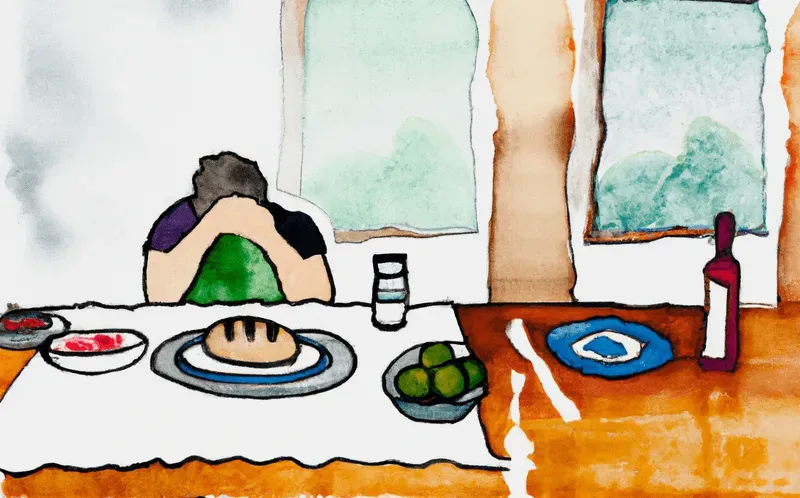
Does Fasting After a Binge Help?

Medical Reviewer: Blair Kott, MDA, RD, LD

Author: Julia Zakrzewski, RD

Summary
- Some people fast or restrict their food intake after a binge eating episode in an attempt to compensate for the calories consumed.
- Fasting after binge eating is not recommended because it can increase hunger and the risk of another binge occurring.
- Give yourself compassion after a binge episode. Avoid fasting and over-exercising, and instead focus on fueling your body with small, frequent meals.
Updated by: Jennifer Huddy, MS, RD
Overeating happens to all of us on occasion.
Think about a time you ate more than your body needed. You may have felt some physical discomfort and a desire to eat less for future meals.
However, skipping meals and fasting isn’t a long-term solution after a binge.
There’s a greater risk you’ll end up overeating at your next meal, too.
Keep reading to learn why fasting after a binge doesn’t work and what you can do instead.
{{splash}}
What Is Fasting?
When people are fasting, they avoid consuming food and calorie-containing beverages.
Some people fast for religious or cultural reasons, while others engage in intermittent fasting (IF), a diet based on fasting during certain times of the day for metabolic benefits.
Some people attempt to fast after a binge eating episode to offset the number of calories they consume.
This often looks like skipping one or more meals, which can be a slippery slope.
Skipping meals can be viewed as a type of punishment for overeating, and it can strain your long-term relationship with food.
Chronically skipping meals can also make it harder to get all the nutrients and vitamins you need in a day to stay healthy.
Is Fasting Healthy?
Short-term studies have demonstrated some health benefits to intermittent fasting, such as improved insulin sensitivity, lower cholesterol levels, and weight loss. However, more long-term data is needed.
Any potential metabolic improvements related to fasting will be highly individualized.
This is because many factors influence a person’s metabolic rate, such as sex, age, and general health status.
Additionally, there are several types of intermittent fasting, some much more restrictive than others.
This makes it challenging to make blanket statements about whether IF is healthy for everyone.
We know that fasting can impact areas of your health beyond your metabolism.
Some studies have shown that fasting may impact fertility over time.
A review from 2022 found that men who engage in fasting may have more problems with reproductive health due to reduced androgen (sex hormone) levels and decreased libido.
On the other hand, reducing androgen may be helpful for women with polycystic ovarian syndrome (PCOS) because they tend to have elevated androgen levels.
More research is needed in this area to learn how fasting impacts different populations.
What Is A Binge?
Binge eating is defined as consuming a large portion of food in a short period of time.
It’s often associated with feeling a lack of control.
After a binge, you may be physically uncomfortable and feel guilty or distressed.
At some point, everyone has consumed more than they need; it’s a normal part of the human experience.
However, if the frequency of binge eating increases and you often feel guilty afterward, it could be the right time to meet with a doctor and get assessed for binge eating disorder (BED).
Binge eating disorder is a mental health condition that requires treatment from experienced healthcare providers and sometimes medication.
Does Fasting After A Binge Help?
Fasting after a binge is unlikely to improve your health and well-being.
Going without food can leave you hungry, susceptible to mood swings, and frustrated.
A small study from 2021 asked 64 participants to report their hunger levels and emotions over 21 days.
At the end of the study, researchers found a significant link between high hunger levels and negative emotions.
This study, and others, suggest that going too long without food can impact your mood, productivity, and general outlook.
Does Fasting Increase Binge Eating?
For some people, fasting after a binge can contribute to a binge-restrict cycle.
If you repeatedly binge eat, restrict your food intake or fast, and become overly hungry and binge again, this may apply to you.
Research shows that intermittent fasting is associated with disordered eating and an increased eating disorder risk.
A five-year study from 2008 found that people who engaged in fasting were at a higher risk of experiencing recurrent binge eating episodes.
Similarly, skipping meals was also linked with a greater binge eating frequency.
Why You Shouldn’t Fast After a Binge
Fasting after a binge is counterproductive because it can increase hunger and cravings, leading to more binge eating episodes. It can negatively impact your mood and well-being.
Lastly, fasting after a binge perpetuates disordered eating tendencies and can worsen your relationship with food, increasing your risk of developing an eating disorder.
6 Things You Can Do Instead Of Fasting After A Binge
Instead of fasting after a binge, try these tips to be kind to your body and prevent future binge episodes.
1. Practice Self-Compassion
Kindness goes a long way, and practicing self-compassion is pivotal for making meaningful nutrition changes.
Remind yourself that your metabolism can handle an episode of excess calories from time to time.
One day of binge eating doesn't make you bad and shouldn't impair your long-term health.
2. Build A Consistent Meal Plan
A binge is more likely to happen when you are hungry and have skipped a meal.
To prevent this from happening, follow a consistent eating schedule throughout the day.
A well-timed snack can also help too.
Choose options high in fiber, and add a lean protein or healthy fat to round out the snack.
Popular options include an apple with peanut butter or plain Greek yogurt with fresh fruit.
3. Incorporate Gentle Movement
Avoid over-exercising in an attempt to burn off the calories after a binge.
It's unlikely to help your metabolism and may cause digestive symptoms like upset stomach and cramping.
Instead, opt for light movement to help your natural digestion process.
Go for a brief walk and let gravity and your body do the rest.
4. Keep A Food Diary And Document Any Triggers
Logging your experiences and identifying triggers for a binge can be an eye-opening experience.
Bringing this data to an appointment with a dietitian can help them understand your situation and offer tailored solutions.
5. Listen To Your Hunger Cues
Eventually, after a binge, you will feel hungry again.
Listen to what your body needs and choose foods or snacks that will make you feel happy and satisfied.
Instead of worrying about your next portion size, pay attention to the moment you feel full.
6. Avoid Restricting Food
Short-term food restrictions can increase your cravings.
The denial can lead to future binge-eating episodes.
Instead, work on including all your favorite foods in different portions throughout the week.
The healthy plate model is a great guide to help you build balanced meals.
Takeaway
Though you may feel the urge to fast or restrict your food intake after a binge, this can be counterproductive for several reasons.
Fasting after a binge can increase your risk of future binge eating episodes. It can also negatively impact your mood and relationship with food.
Instead, treat yourself with compassion after a binge and reflect on your triggers.
Focus on eating regular meals and snacks and seeking professional help when necessary.
Work With A Registered Dietitian
You don’t have to be alone in your journey to overcome binge eating.
A registered dietitian can provide one-on-one counseling to help you discover your binge eating triggers and teach you how to handle these scenarios in a healthy way.
Your sessions may include topics like intuitive eating, gentle exercise, and meeting your health goals without restrictive dieting.
Find a dietitian specializing in binge eating to help you stop the pattern of overeating.
Frequently Asked Questions
References
View all references
- Cienfuegos, S., Corapi, S., Gabel, K., Ezpeleta, M., Kalam, F., Lin, S., Pavlou, V., & Varady, K. A. (2022). Effect of Intermittent Fasting on Reproductive Hormone Levels in Females and Males: A Review of Human Trials. Nutrients, 14(11), 2343.
- Varady, K. A., Cienfuegos, S., Ezpeleta, M., & Gabel, K. (2021). Cardiometabolic Benefits of Intermittent Fasting. Annual Review of Nutrition, 41(1), 333–361.
- Binge Eating Disorder. (n.d.). NAMI Michigan.
- Amianto, F., Ottone, L., Abbate Daga, G., & Fassino, S. (2015). Binge-eating disorder diagnosis and treatment: a recap in front of DSM-5. BMC psychiatry, 15, 70.
- Swami, V., Hochstöger, S., Kargl, E., & Stieger, S. (2022). Hangry in the field: An experience sampling study on the impact of hunger on anger, irritability, and affect. PloS one, 17(7), e0269629.
- Ackermans, M. A., Jonker, N. C., Bennik, E. C., & de Jong, P. J. (2022). Hunger increases negative and decreases positive emotions in women with a healthy weight. Appetite, 168, 105746.
- MacCormack, J. K., & Lindquist, K. A. (2019). Feeling hangry? When hunger is conceptualized as emotion. Emotion (Washington, D.C.), 19(2), 301–319.
- Meule A. (2020). The Psychology of Food Cravings: the Role of Food Deprivation. Current nutrition reports, 9(3), 251–257.
- MyPlate | U.S. Department of Agriculture. (n.d.).
- Stice, E., Davis, K., Miller, N. P., & Marti, C. N. (2008). Fasting Increases Risk for Onset of Binge Eating and Bulimic Pathology: A 5-Year Prospective Study. Journal of Abnormal Psychology, 117(4), 941.
- Shalabi, H., AL-Zahrani, F. A., Alarbeidi, A. H., Mesawa, M., Rizk, H., & Aljubayri, A. A. (2023). Intermittent Fasting: Benefits, Side Effects, Quality of Life, and Knowledge of the Saudi Population. Cureus, 15(2).
- Zeballos E, Todd JE. The effects of skipping a meal on daily energy intake and diet quality. Public Health Nutr. 2020 Dec;23(18):3346-3355.
- Amianto, F., Ottone, L., Abbate Daga, G., & Fassino, S. (2015). Binge-eating disorder diagnosis and treatment: a recap in front of DSM-5. BMC psychiatry, 15, 70.
- Vasim, I., Majeed, C. N., & DeBoer, M. D. (2022). Intermittent Fasting and Metabolic Health. Nutrients, 14(3).
- Johnstone AM, Murison SD, Duncan JS, Rance KA, Speakman JR. Factors influencing variation in basal metabolic rate include fat-free mass, fat mass, age, and circulating thyroxine but not sex, circulating leptin, or triiodothyronine. Am J Clin Nutr. 2005 Nov;82(5):941-8.
- Cienfuegos, S., Corapi, S., Gabel, K., Ezpeleta, M., Kalam, F., Lin, S., Pavlou, V., & Varady, K. A. (2022). Effect of Intermittent Fasting on Reproductive Hormone Levels in Females and Males: A Review of Human Trials. Nutrients, 14(11), 2343.
- Binge Eating Disorder. (n.d.). NAMI Michigan.
- Swami, V., Hochstöger, S., Kargl, E., & Stieger, S. (2022). Hangry in the field: An experience sampling study on the impact of hunger on anger, irritability, and affect. PloS one, 17(7), e0269629.
- MacCormack, J. K., & Lindquist, K. A. (2019). Feeling hangry? When hunger is conceptualized as emotion. Emotion (Washington, D.C.), 19(2), 301–319.
- Ackermans, M. A., Jonker, N. C., Bennik, E. C., & de Jong, P. J. (2022). Hunger increases negative and decreases positive emotions in women with a healthy weight. Appetite, 168, 105746.
- Blumberg, J., Hahn, S. L., & Bakke, J. (2023). Intermittent fasting: Consider the risks of disordered eating for your patient. Clinical Diabetes and Endocrinology, 9.
- Parry SA, Woods RM, Hodson L, Hulston CJ. A Single Day of Excessive Dietary Fat Intake Reduces Whole-Body Insulin Sensitivity: The Metabolic Consequence of Binge Eating. Nutrients. 2017; 9(8):818.
- Martenstyn JA, Touyz S, Maguire S. Treatment of compulsive exercise in eating disorders and muscle dysmorphia: protocol for a systematic review. J Eat Disord. 2021 Feb 10;9(1):19.
- Meule A. (2020). The Psychology of Food Cravings: the Role of Food Deprivation. Current nutrition reports, 9(3), 251–257.
Nourish has strict sourcing policies and prioritizes primary sources, including medical organizations, governmental agencies, academic institutions, and peer-reviewed scientific journals. Learn more about our medical review process and editorial guidelines.
.avif)




.avif)


.avif)
.avif)