Can Probiotics Help You Lose Weight?

Medical Reviewer: Ellie Stamerjohn, MS, RDN, LD

Author: Sarah Glinski, RD
.avif)
Summary
- Research demonstrates a relationship between changes in the gut microbiota and the development and progression of obesity.
- Probiotics may influence body weight through their involvement in metabolism, inflammation, and appetite regulation.
- Weight loss with probiotics is strain-specific. Most probiotics associated with weight loss belong to the genus Lactobacillus or Bifidobacterium.
The gut microbiota is the community of trillions of microorganisms that inhabit the gastrointestinal tract.
These microbes are involved in many aspects of human health, including the immune system and metabolism.
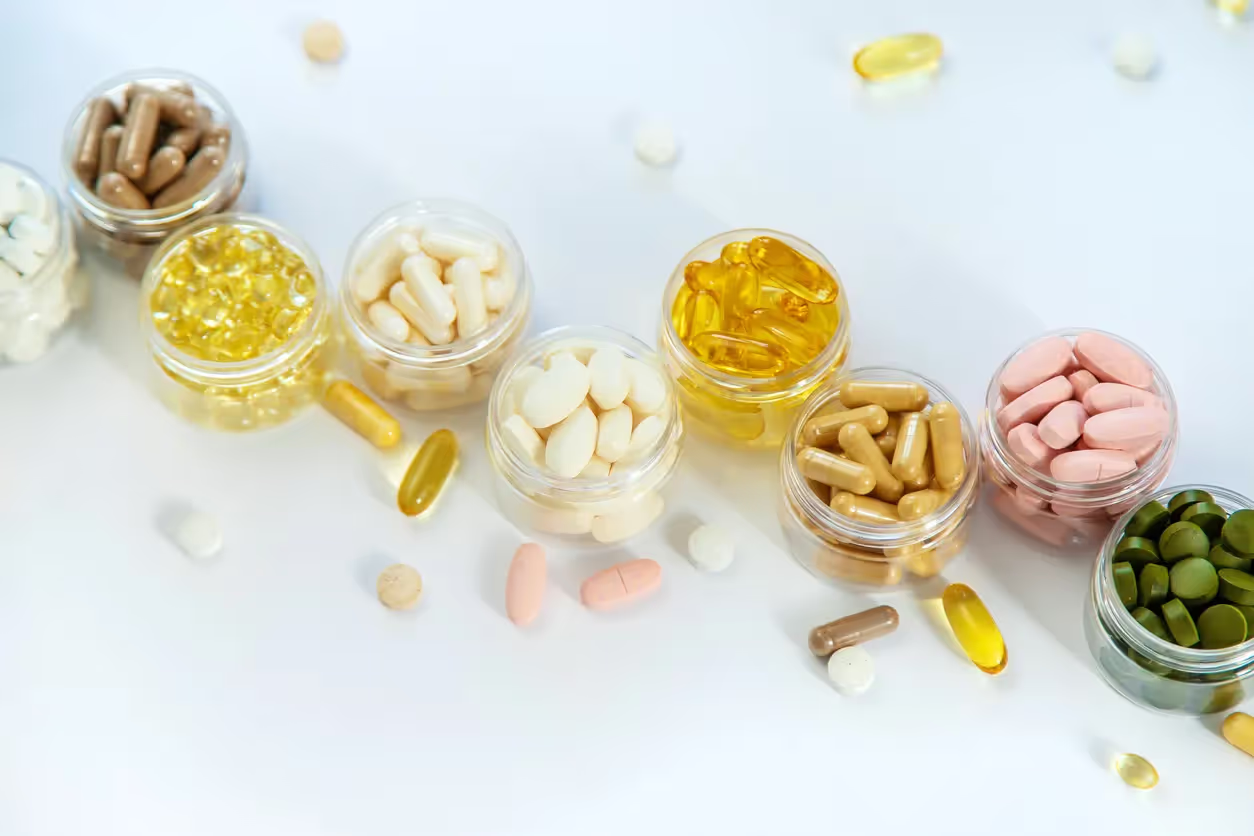
Probiotics are live microorganisms that benefit human health when taken in the right amounts.
They can be found in some fermented foods, added to food products, or as dietary supplements.
Probiotics are classified by strain. Not all strains produce the same health benefits.
Therefore, choosing a strain that has been studied for the specific health benefit you want to achieve is important.
While the relationship between the gut microbiota and body weight is complex, research shows that the gut microbiota may be involved in the development and progression of obesity.
Given this relationship, many people are asking the question–can probiotics help you lose weight?
Read on to learn more about the relationship between probiotics and body weight, how to choose the right probiotic for your weight loss plan, and tips for incorporating probiotics into your daily routine.
{{splash}}
Can Probiotics Help You Lose Weight?
While more human studies are needed, initial studies in mice indicate a relationship between the gut microbiota and obesity.
When mice that have had their microbiota removed (known as germ-free mice) receive microbes from humans with obesity, they gain more weight than mice receiving microbes from humans without obesity.
This suggests that certain microbes may have the ability to promote weight gain.
Studies in mice also show that obesity is associated with a decreased abundance of Bacteriodetes and an increase in Firmicutes.
This change in abundance is thought to increase the mice's ability to extract energy from their diet.
Other studies in mice suggest that certain microbes, such as Akkermansia muciniphila can reverse obesity caused by a high-fat diet. This has also been shown in humans, with administration of A. muciniphila being associated with improved insulin sensitivity, lower cholesterol levels, moderately reduced body weight, reduced fat mass, and reduced hip circumference.
Other strains of bacteria have also been associated with weight loss in humans.
Lactobacillus gasseri BNR17 has been shown to reduce fat accumulation around the organs and reduce waist circumference in adults with obesity.
Potential Impact of Probiotics on Weight Loss
The exact mechanisms by which probiotics and the gut microbiota influence body weight are still being studied, but the following factors may play a role.
Metabolic Efficiency
Studies demonstrate that certain microbes are better at extracting energy (i.e., calories) from food. If a person has a high abundance of these microbes, they may experience greater calorie absorption and potentially gain weight.
If a person receives probiotics that are less efficient at extracting calories from food, they may have less calorie absorption, leading to weight loss.
More research is needed to confirm this theory.
Inflammation and Metabolism
Changes in gut microbiota composition are associated with chronic, low-grade inflammation, which may promote insulin resistance, diabetes, and obesity.
Several probiotic strains have been shown to reduce inflammation in the body.
Therefore, probiotics could be a valuable treatment for inflammation-related conditions, such as obesity and diabetes.
Appetite Regulation
The gut microbiota plays a key role in producing neurotransmitters and hormones involved in appetite regulation and satiety.
Since these factors are principal drivers of eating behaviors, probiotics that promote satiety-signaling hormones could be beneficial for weight loss.
Other Benefits of Taking Probiotics
In addition to their potential positive effects on body weight, there are several other potential benefits of taking probiotics, including:
- Reducing the risk of developing eczema.
- Preventing antibiotic-associated diarrhea.
- Treating irritable bowel syndrome (IBS).
- Reducing cholesterol levels.
- Treating constipation.
- Reducing the risk of traveler’s diarrhea.
- Treating gum disease.
However, it’s important to note that not all strains of probiotics produce these benefits.
Benefits are typically strain-specific, meaning you must choose a specific probiotic based on the benefits you hope to achieve.
Choosing the Right Probiotics for Weight Loss
Not all probiotic strains are associated with weight loss.
Most strains associated with weight loss come from the genus Lactobacillus and Bifidobacterium.
Recommended Strains for Weight Loss
A systematic review looking at the effectiveness of various probiotic strains for weight loss found that the following probiotics were effective for weight loss:
- Lactobacillus gasseri BNR17
- Lactobacillus gasseri SBT2055.
- Lactobacillus rhamnosus.
- Lactobacillus plantarum KY1032.
- Lactobacillus curvatus HY7601.
This study also showed that other Lactobacillus species, such as Lactobacillus acidophilus, promoted weight loss when combined with other Lactobacillus species and species from the Bifidobacterium genus.
Factors to Consider When Selecting
When choosing a probiotic supplement for weight loss, consider the following factors:
- Strain: Choose a strain associated with weight loss, such as L. gasseri or L. rhamnosus.
- CFU Count: CFU (colony-forming units) indicates the number of live bacteria in a supplement. Look for supplements with several billion CFUs per serving.
- Expiration Date: Ensure you can finish the bottle of probiotics before the expiration date. After the expiration date, the supplement may contain fewer live bacteria, reducing its effectiveness.
- Formulation: Probiotics are available in various forms, including capsules, tablets, powders, or liquids. Some need to be refrigerated, while others are shelf-stable. Choose a formulation that you will be able to take consistently.
- Quality and Purity: Choose supplements from reputable manufacturers that adhere to Current Good Manufacturing Practices (CGMP) and have undergone third-party testing for quality and purity.
- Additional Ingredients: Some probiotics may contain additional ingredients like prebiotics or digestive enzymes to enhance their effectiveness.
- Consider whether these added ingredients align with your health goals and dietary preferences.
In addition to considering these factors, you may find it helpful to consult with a healthcare professional if you have specific health concerns or medical conditions you hope to manage with probiotics.
They can provide personalized recommendations based on your needs, preferences, and medical history.
Incorporating Probiotics Into Your Weight Loss Plan
There are several ways to incorporate probiotics into your weight loss plan, but probiotics should be combined with other diet and lifestyle changes for best results.
A comprehensive approach is typically recommended for sustained weight loss.
Take Your Probiotic Supplement Daily
If you struggle to remember to take your probiotic supplement, consider tying it to another habit (like brushing your teeth or eating breakfast) or setting a reminder on your phone. To be effective, you need to take your probiotic supplement as directed on the packaging or by your healthcare provider, which is typically daily.
Eat Fermented Foods
Some fermented foods naturally contain probiotics.
Yogurt is a good example. Look for “live and active cultures” on the label to ensure it contains live microbes.
Other fermented foods contain live and active cultures but may not contain proven probiotics.
However, these foods, such as kefir, kimchi, sauerkraut, tempeh, miso, and kombucha, aren’t just beneficial due to their live microbes–they also contain nutrients like protein, fiber, vitamins, and minerals, which are important for a weight loss plan.
Eat Prebiotic-Rich Foods
Prebiotics feed the beneficial bacteria in your gut.
They’re found in foods like onions, garlic, leeks, bananas, asparagus, oats, and apples.
Pairing prebiotic-rich foods with probiotics may enhance the effectiveness of the probiotics.
It’s best to increase your intake of prebiotic foods slowly, as increasing them too quickly can result in gas and bloating due to fermentation by the gut bacteria.
{{splash}}
Get Regular Exercise
It’s important to pair probiotic intake with regular physical activity for the best weight loss results.
Studies show that exercise positively influences the gut microbiota and may enhance the effects of probiotics on weight loss and overall health.
Takeaway
The relationship between the gut microbiota and body weight is complex. However, some studies show that certain microbes may promote weight loss. These probiotic microbes include L. gasseri, L. rhamnosus, L. plantarum, and L. curvatus. For best results, probiotic supplements should be combined with other diet and lifestyle changes like eating fermented foods, increasing your prebiotic intake, and getting regular exercise.
How a Dietitian Can Help
While probiotics can support weight loss, a comprehensive approach is the best strategy for achieving sustainable weight loss.
Consider working with a weight loss dietitian who can help create a weight loss plan tailored to your specific needs and lifestyle.
They can also help you choose the best probiotics to support your weight loss efforts.
You can find a dietitian who accepts insurance through Nourish.
Frequently Asked Questions
Can probiotics help you lose belly fat?
Studies with the probiotic strain Lactobacillus gasseri had a decrease in body weight, waist circumference, and fat around the organs. Therefore, L. gasseri may be effective for helping you lose belly fat. However, probiotics alone may not be enough to lose belly fat; it’s also important to eat a balanced diet, exercise, sleep well, and manage stress levels.
Which probiotics are best for weight loss?
According to a systematic review published in 2021, the best probiotics for weight loss include:
- Lactobacillus gasseri BNR17
- Lactobacillus gasseri SBT2055.
- Lactobacillus rhamnosus.
- Lactobacillus plantarum KY1032.
- Lactobacillus curvatus HY7601.
How quickly do probiotics work for weight loss?
Studies looking at the effectiveness of probiotics for weight loss have ranged from four to 36 weeks.
Most of the studies showing beneficial effects lasted for 12 weeks.
Therefore, it appears that you need to take probiotics for at least 12 weeks for weight loss.
References
View all references
- Valdes AM, Walter J, Segal E, Spector TD. 2018. Role of the gut microbiota in nutrition and health. BMJ. 361:k2179. doi: 10.1136/bmj.k2179.
- National Institutes of Health Office of Dietary Supplements. (November 3, 2023). Probiotics: Fact Sheet for Health Professionals. Retrieved April 12, 2024, from https://ods.od.nih.gov/factsheets/Probiotics-HealthProfessional/
- Goodrich JK, Waters JL, Poole AC, Sutter JL, Koren O, Blekhman R, Beaumont M, Van Treuren W, Knight R, Bell JT, Spector TD, Clark AG, Ley RE. 2014. Human genetics shape the gut microbiome. Cell. 159(4):789-99. doi: 10.1016/j.cell.2014.09.053.
- Cani PD, de Vos WM. 2017. Next-Generation Beneficial Microbes: The Case of Akkermansia muciniphila. Front Microbiol. 8:1765. doi: 10.3389/fmicb.2017.01765.
- Depommier C, Everard A, Druart C, Plovier H, Van Hul M, Vieira-Silva S, Falony G, Raes J, Maiter D, Delzenne NM, de Barsy M, Loumaye A, Hermans MP, Thissen JP, de Vos WM, Cani PD. 2019. Supplementation with Akkermansia muciniphila in overweight and obese human volunteers: a proof-of-concept exploratory study. Nat Med. 25(7):1096-1103. doi: 10.1038/s41591-019-0495-2.
- Kim J, Yun JM, Kim MK, Kwon O, Cho B. 2018. Lactobacillus gasseri BNR17 Supplementation Reduces the Visceral Fat Accumulation and Waist Circumference in Obese Adults: A Randomized, Double-Blind, Placebo-Controlled Trial. J Med Food. 2018 May;21(5):454-461. doi: 10.1089/jmf.2017.3937.
- Liu BN, Liu XT, Liang ZH, Wang JH. 2021. Gut microbiota in obesity. World J Gastroenterol. 27(25):3837-3850. doi: 10.3748/wjg.v27.i25.3837. PMID: 34321848; PMCID: PMC8291023.
- Chassaing B, Gewirtz AT. 2014. Gut microbiota, low-grade inflammation, and metabolic syndrome. Toxicol Pathol. 42(1):49-53. doi: 10.1177/0192623313508481.
- Cristofori F, Dargenio VN, Dargenio C, Miniello VL, Barone M, Francavilla R. 2021. Anti-Inflammatory and Immunomodulatory Effects of Probiotics in Gut Inflammation: A Door to the Body. Front Immunol. 12:578386. doi: 10.3389/fimmu.2021.578386.
- Han H, Yi B, Zhong R, Wang M, Zhang S, Ma J, Yin Y, Yin J, Chen L, Zhang H. 2021. From gut microbiota to host appetite: gut microbiota-derived metabolites as key regulators. Microbiome. 9(1):162. doi: 10.1186/s40168-021-01093-y.
- NIH National Center for Complementary and Integrative Health. (July, 2019). Probiotics: What You Need To Know. Retrieved April 12, 2024, from https://www.nccih.nih.gov/health/probiotics-what-you-need-to-know
- Centers for Disease Control and Prevention. (June 15, 2023). Losing Weight. Retrieved April 12, 2024, from https://www.cdc.gov/healthyweight/losing_weight/index.html
- Dalton A, Mermier C, Zuhl M. 2019. Exercise influence on the microbiome-gut-brain axis. Gut Microbes. 10(5):555-568. doi: 10.1080/19490976.2018.1562268.
- Davani-Davari D, Negahdaripour M, Karimzadeh I, Seifan M, Mohkam M, Masoumi SJ, Berenjian A, Ghasemi Y. 2019. Prebiotics: Definition, Types, Sources, Mechanisms, and Clinical Applications. Foods. 8(3):92. doi: 10.3390/foods8030092.
- U.S. Food & Drug Administration. (n.d.). Current Good Manufacturing Practice (CGMP) Regulations. Retrieved April 12, 2024, from https://www.fda.gov/drugs/pharmaceutical-quality-resources/current-good-manufacturing-practice-cgmp-regulations
- Álvarez-Arraño V, Martín-Peláez S. 2021. Effects of Probiotics and Synbiotics on Weight Loss in Subjects with Overweight or Obesity: A Systematic Review. Nutrients. 2021 Oct 17;13(10):3627. doi: 10.3390/nu13103627.
- International Dairy Foods Association. (n.d.). Live & Active Cultures Seal. Retrieved April 12, 2024, from https://www.idfa.org/live-active-cultures-seal
Nourish has strict sourcing policies and prioritizes primary sources, including medical organizations, governmental agencies, academic institutions, and peer-reviewed scientific journals. Learn more about our medical review process and editorial guidelines.
More articles
%201%20(1).jpg)


.avif)












.avif)





























.avif)







.avif)
.avif)








.avif)
.avif)