Tips for Losing Weight in Your 40s

Medical Reviewer: Ellie Stamerjohn, MS, RDN, LD

Author: Sarah Bullard, MS, RD

Summary
- Weight loss is more challenging as you age, and the physical and hormonal changes accumulate as you enter your 40s.
- Realistic weight loss goals help you achieve healthier weight and long-term maintenance.
- Diet, physical activity, sleep, and lifestyle changes can counteract weight gain in your 40s
All through life, your body adapts and grows at different rates.
As you age, it becomes harder to lose weight or maintain the same weight or size, even if you feel like there are minimal changes in diet and lifestyle.
Weight gain can happen quietly with seemingly small changes like sitting more (work and life-related) and exercising less.
You can counterbalance these aging changes and maintain a healthy body and lifestyle.
Keep reading to learn valuable tips, strategies, and advice for losing weight in your 40s and maintaining a healthy lifestyle.
Whether you're looking to shed a few pounds or make long-term changes, here are tips to help you succeed.
Why Is It Harder To Lose Weight After 40?
Many factors make it harder to lose weight after 40.
Hormone changes, less physical activity, and sedentary time have slowly accumulated over ten years.
Additionally, life responsibilities may have increased due to work or family demands, leaving less time for physical activity, self-care, and balanced meals.
Causes of Weight Gain After 40
It’s difficult to predict how your weight will change as you age.
Below are possible causes that may contribute to weight gain after 40.
Changes in Muscle Mass and Fat
One key reason for difficulty losing weight after 40 is the involuntary loss of muscle mass and strength.
Muscle mass decreases and shifts to fat mass between 3 and 8% per decade after age 30.
This rate of decline increases rapidly after age 60, contributing mainly to disability and dependence in older adults.
Counteracting this decline can help prevent weight gain and early loss of independence as you age.
Increased Sedentary Activity
A 2021 study of 2,640 adults reports that adults are sedentary for about nine and a half hours daily, including leisure time, work, household activities, and transportation.
Adults in their 20s and 30s are sedentary for about nine hours daily, whereas adults in their 40s shift to ten hours.
Leisure time sedentary behavior increases as adults enter their 40s.
On average, Americans of all ages spend 4.3 hours on sedentary leisure, with 80% of this time spent on electronic media.
Sedentary behavior does not use as much energy.
Optimizing some of the four hours of leisure time for physical activity can help offset weight gain as you age.
Less Physical Activity
Over forty percent of Americans are inactive or insufficiently physically active compared to the goal of 150 minutes weekly of aerobic activity set by the United States Department of Health.
Physical activity helps to build muscle mass, burn energy (calories), and prevent chronic diseases like diabetes and heart disease.
Hormonal Shifts
Testosterone levels decline as men and women age. Testosterone is attributed to increased muscle building, mass, and strength.
Lower levels are associated with lower muscle mass.
Men’s testosterone levels start to decline around age 40.
The drop is slower in men than in the estrogen drop in women after menopause.
By age 70, testosterone levels are 30% of their peak, with three-quarters of men maintaining testosterone levels in the normal range.
Testosterone levels at menopause are a quarter of those in women in their twenties.
How To Set Realistic Weight Loss Goals
Set healthy and realistic weight loss goals that are specific, measurable, and attainable.
Start with two or three goals weekly. Here are some examples:
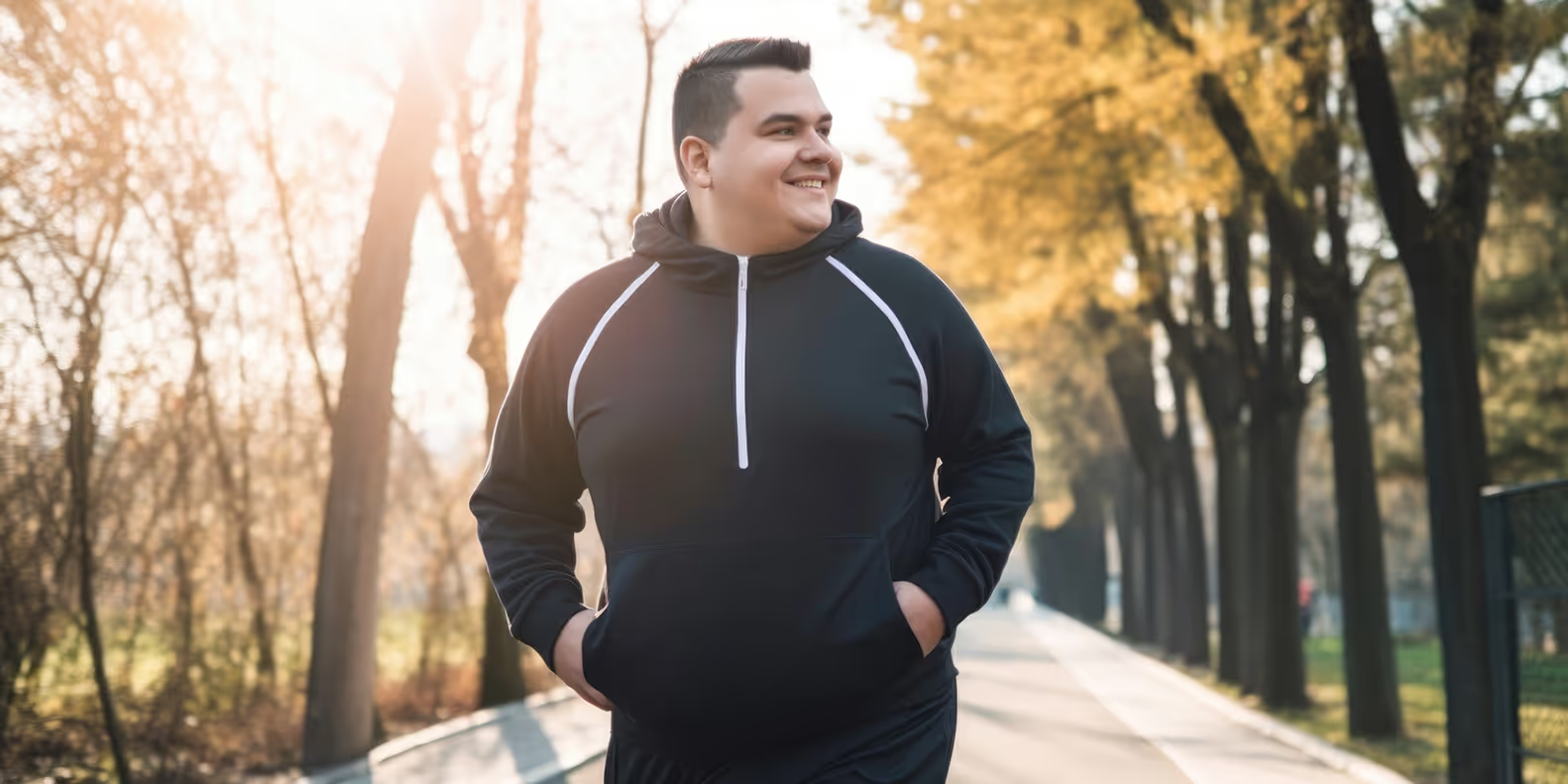
- Walk after work for 30 minutes three times a week.
- Use half my usual sweetener and creamer in my coffee this week.
Review and revise the goals as you learn more about yourself and what worked or didn’t work.
Remember, even if a goal wasn’t successful, it was a learning experience.
A healthy weight loss rate is between one and two pounds per week.
Slow, steady weight loss and a smaller waist or looser pants indicate more muscle and less fat mass.
A beneficial and realistic overall goal is to lose 5 to 7% of your body weight based on lifestyle changes and at least 150 minutes weekly of physical activity.
For an adult weighing 180 pounds, this weight loss equates to about 12 to 13 pounds.
Nutrition Tips for Losing Weight in Your 40s
Read on for diet and lifestyle tips to help you lose weight healthfully.
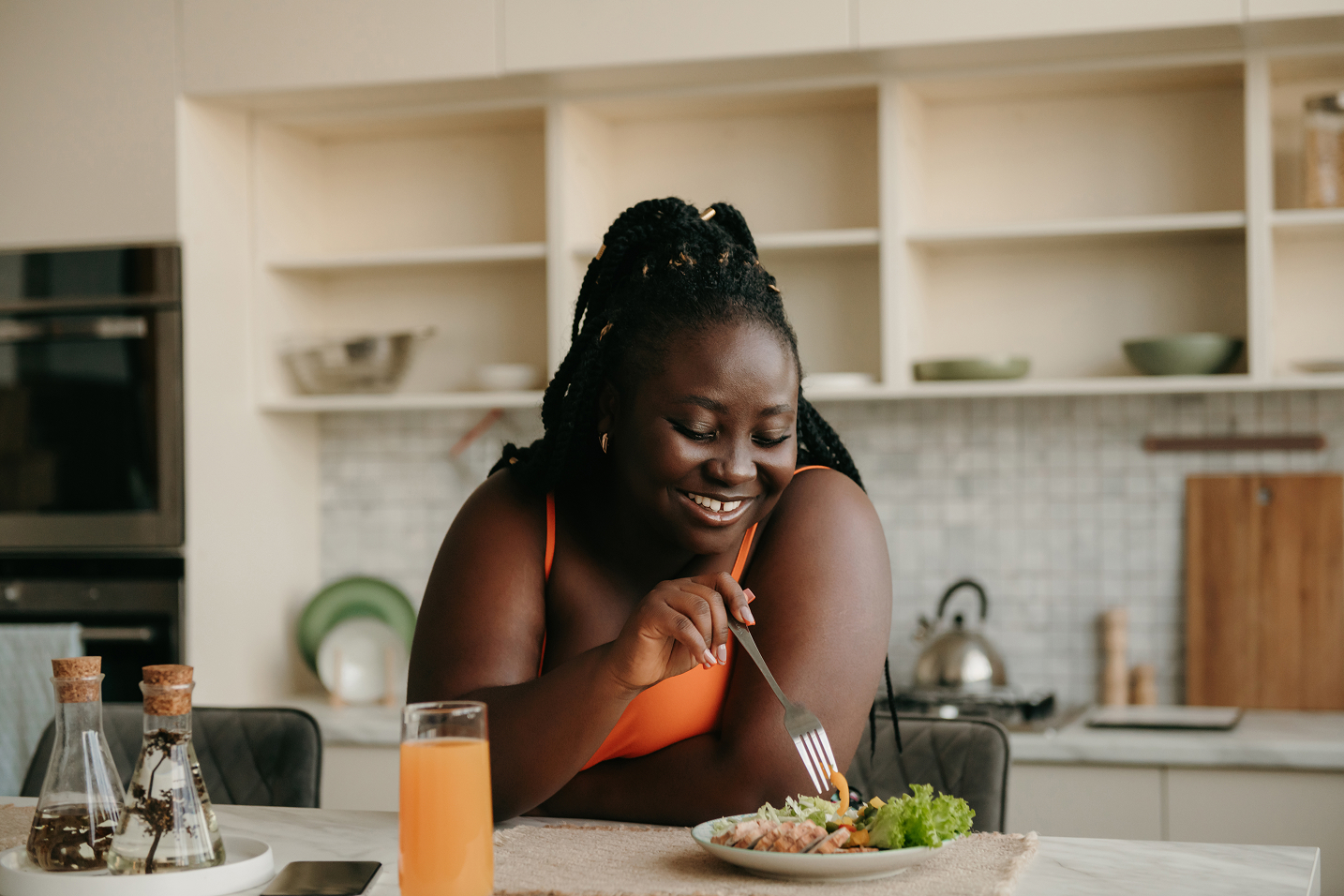
Eat a Balanced Diet
Fueling your body well will help you stay full and nourished.
Start with healthy eating using the Dietary Guidelines for Americans:
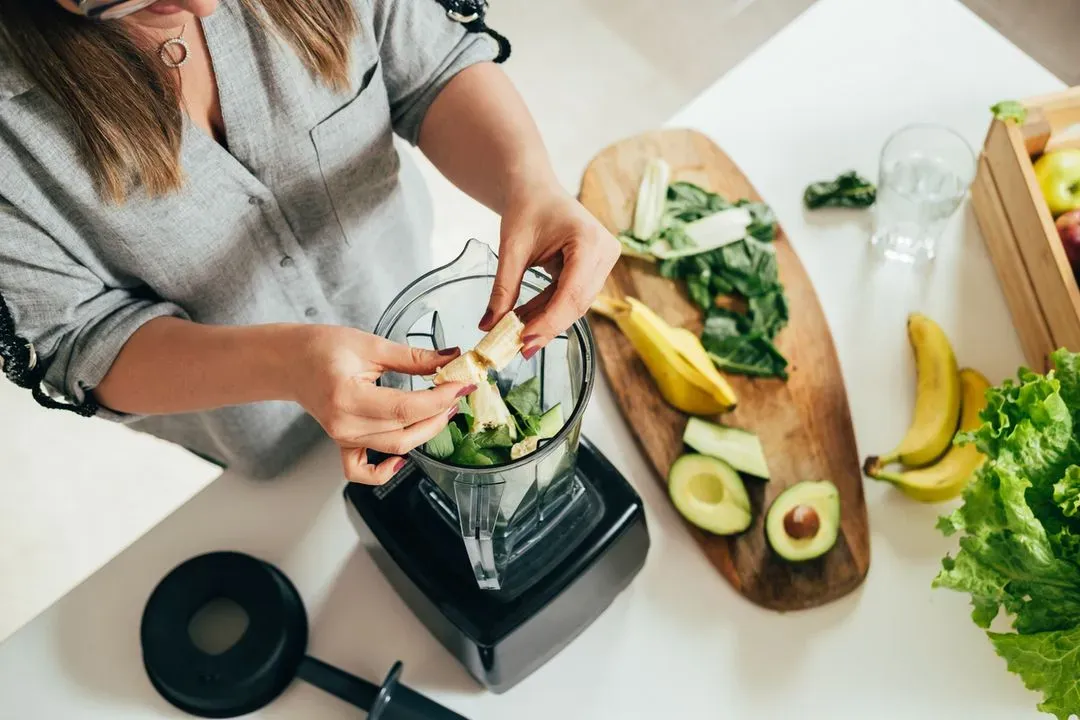
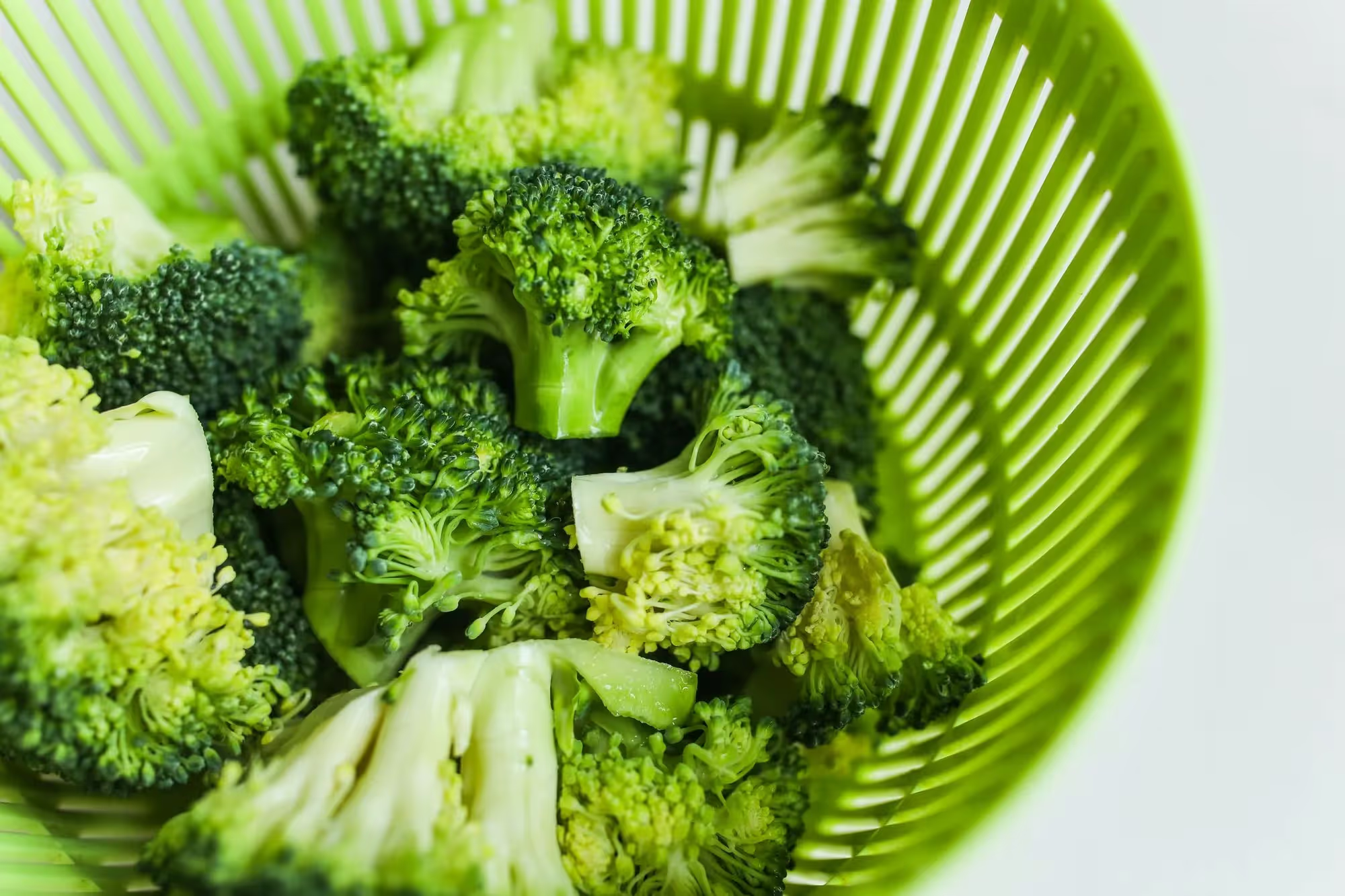
- Prioritize fruits, vegetables, whole grains, and low-fat milk or milk products like yogurt or cheese.
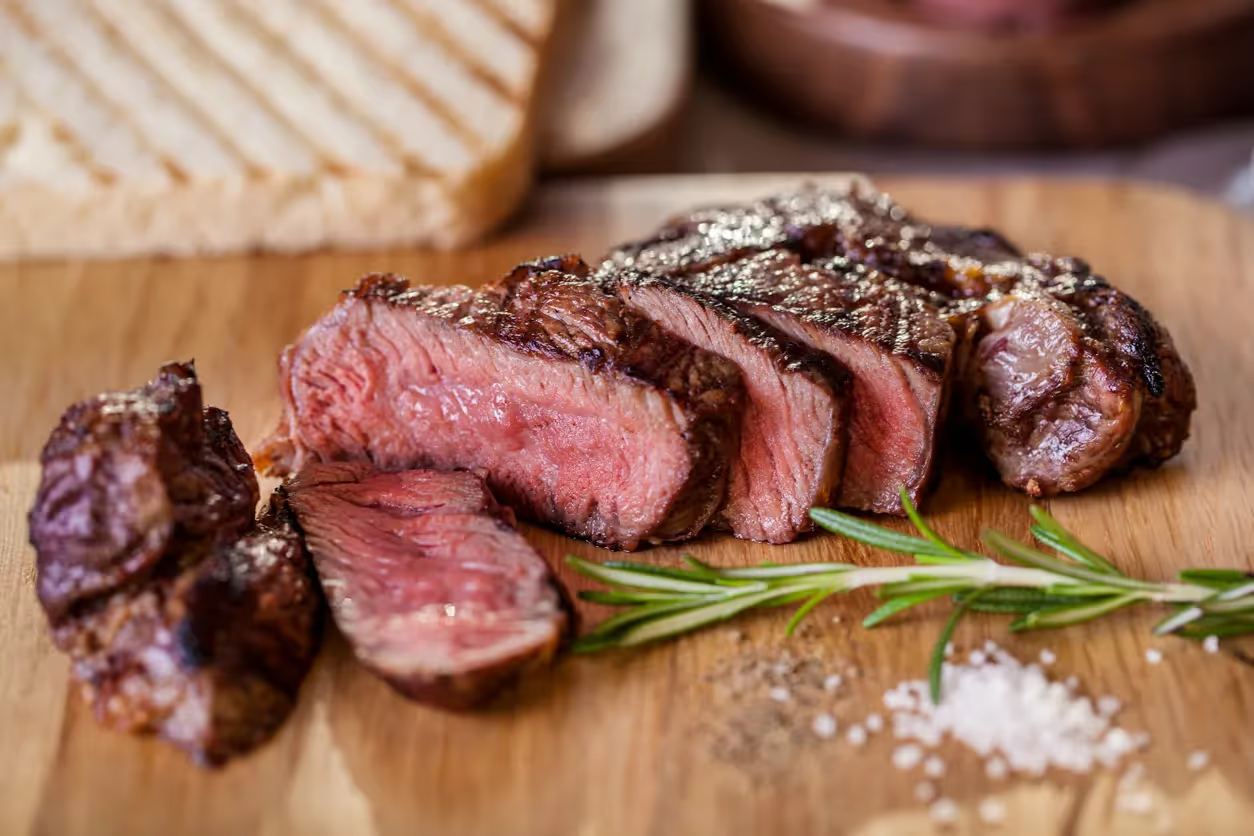
- Include protein options like seafood (salmon or tuna), lean meat or poultry, eggs, legumes and beans, soy products, nuts, and seeds.
- Consume added sugar foods and ultra-processed foods (soda, desserts, sweetened beverages) in moderation.
Calculate how much fat to eat per day!
Increase Protein Intake
Add protein to each meal and snack to help you stay full and prevent mindless snacking.
Everyone’s daily protein needs vary depending on their medical history, body size, and physical activity level, but in general, it’s recommended that adults consume at least 15 to 30 g of protein at meals and 7 to 15 g at snacks.
Drink Plenty of Water
Choosing water over sugar drinks can help with weight loss.
Research shows that excess calories from sugary beverages can add up quickly, increasing weight gain over time.
If you consume sugary or calorie-rich beverages, swapping them for water can help you reduce these empty calories.
Exercise and Physical Activity
Diet changes can help with weight loss and disease prevention.
Adding exercise and physical activity enhances your progress.
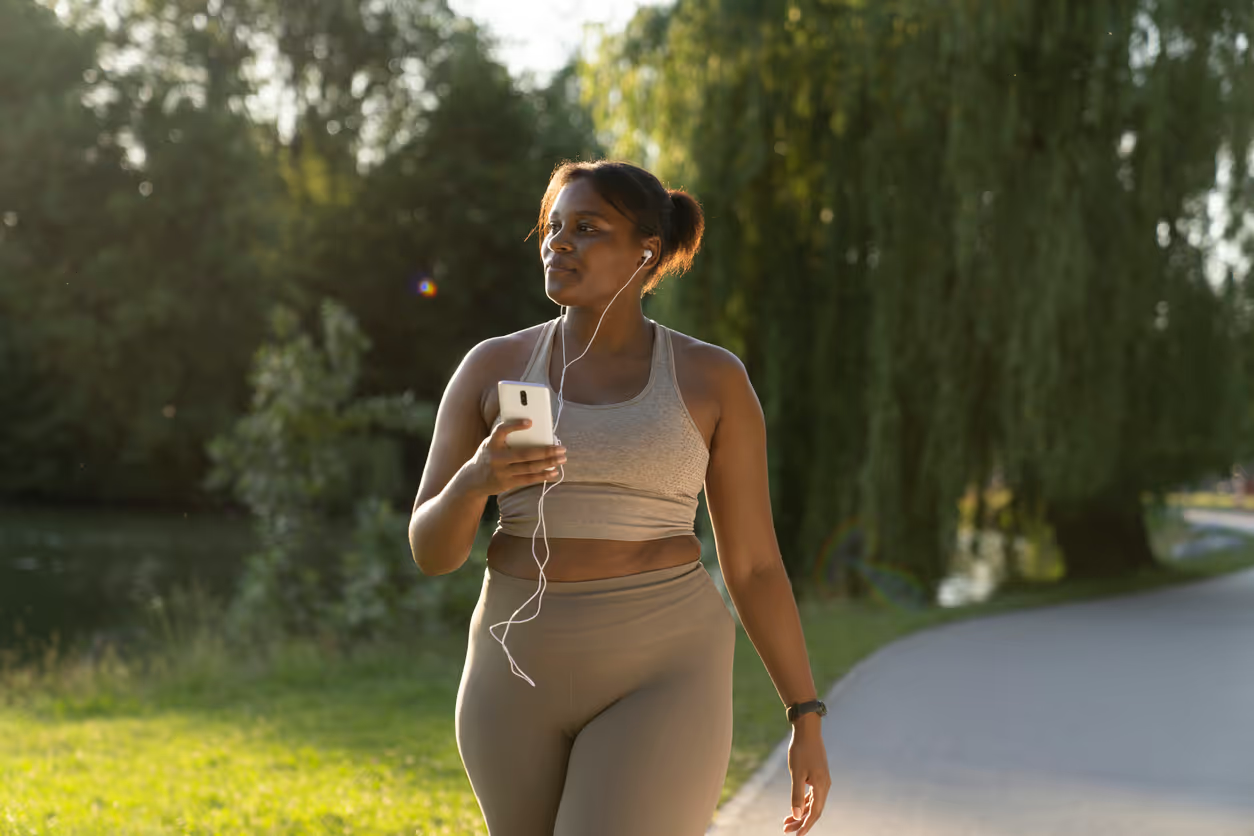
Physical activity isn’t limited to the gym; it is anything that gets you moving—chasing your kids and walking your dog count too.
How Much Physical Activity Do I Need?
According to the Physical Activity Guidelines for Americans, adults need at least 150 minutes of moderate-intensity physical activity (or 75 minutes of vigorous-intensity exercise) and two days of muscle-strengthening activity a week.
You can divide the minutes into several days or longer sessions on fewer days.
Types of Exercises for Weight Loss
Moderate-intensity physical activity includes fast walking, dancing, swimming, gardening, hiking, tennis, or pickleball.
Some of these may move into vigorous intensity depending on rest times and your pace.
Running, jogging, biking, hiking hills, and fast-paced tennis or pickleball would also be vigorous-intensity exercises.
Experiment with different activities to find ones that are enjoyable for you.
Incorporating Strength Training
Strength training (or resistance or weight training) uses body weight, weights, or resistance to build muscle strength.
Some examples include squats, push-ups, pull-ups, lunges, or using resistance bands, free weights, or gym equipment.
These exercises help combat muscle decline as you age.
Lifestyle Changes for Sustainable Weight Loss in Your 40s
Look at your daily and weekly habits.
Make a list of everything you do, no matter how small.
After making a list, ask yourself what activities, such as work hours or household chores, cannot be changed.
You might be able to modify your time spent on these activities, such as a quick walk on a work break, but you are limited in your control of them.
Then, look at what you can control, like phone use or sedentary activities.
Do these activities serve my goal of a healthier lifestyle or preventing health conditions? If they don’t, consider changing the frequency or eliminating them.
This will free up time for meal planning, food preparation, and physical activity.
You can carve out windows of opportunity for activities that serve you well.
Other Tips for Losing Weight in Your 40s
Restorative sleep is often a tool that is disregarded in your weight loss toolbox.
A systematic review article from 2022 delved into aspects of sleep, obesity, and type 2 diabetes.
Poor sleep (including short sleep, sleep deprivation, or disrupted sleep) increases weight.
Some articles within the review article found that short sleep led to less weight loss than well-rested individuals on a similar diet.
For most people, aiming for at least seven hours of sleep was considered restorative.
Try healthy bedtime routines such as putting away technology an hour before bed to help you get restful sleep.
Takeaway
As you age, many factors, such as hormone shifts and reduced muscle mass, make it harder to lose weight after 40.
Sedentary time and physical inactivity tend to increase as we age as well.
You can counteract these shifts with diet, lifestyle, and physical activity changes.
Aim for realistic, steady weight loss to achieve long-term weight loss and maintenance.
How a Dietitian Can Help
A registered dietitian can provide individualized and realistic weight loss or maintenance strategies to help you shed some pounds if needed or maintain muscle mass as you age.
Book an appointment with a dietitian today.
Frequently Asked Questions
Is it harder to lose weight in your 40s?
The main reasons for difficulty losing weight after age 40 is the involuntary loss of muscle mass and strength, increased sedentary time, and less physical activity.
Why am I gaining weight so quickly in my 40s?
Many factors, such as hormone shifts and reduced muscle mass, make it harder to lose weight after forty. Many people have increased work and family demands with less available free time for physical activity.
How much weight does the average woman gain in her 40s?
The average woman gains around 14 to 15 pounds in her forties.
References
View all references
Nourish has strict sourcing policies and prioritizes primary sources, including medical organizations, governmental agencies, academic institutions, and peer-reviewed scientific journals. Learn more about our medical review process and editorial guidelines.
More articles
%201%20(1).jpg)

.avif)












.avif)
















.avif)














.avif)







.avif)
.avif)










.avif)
.avif)