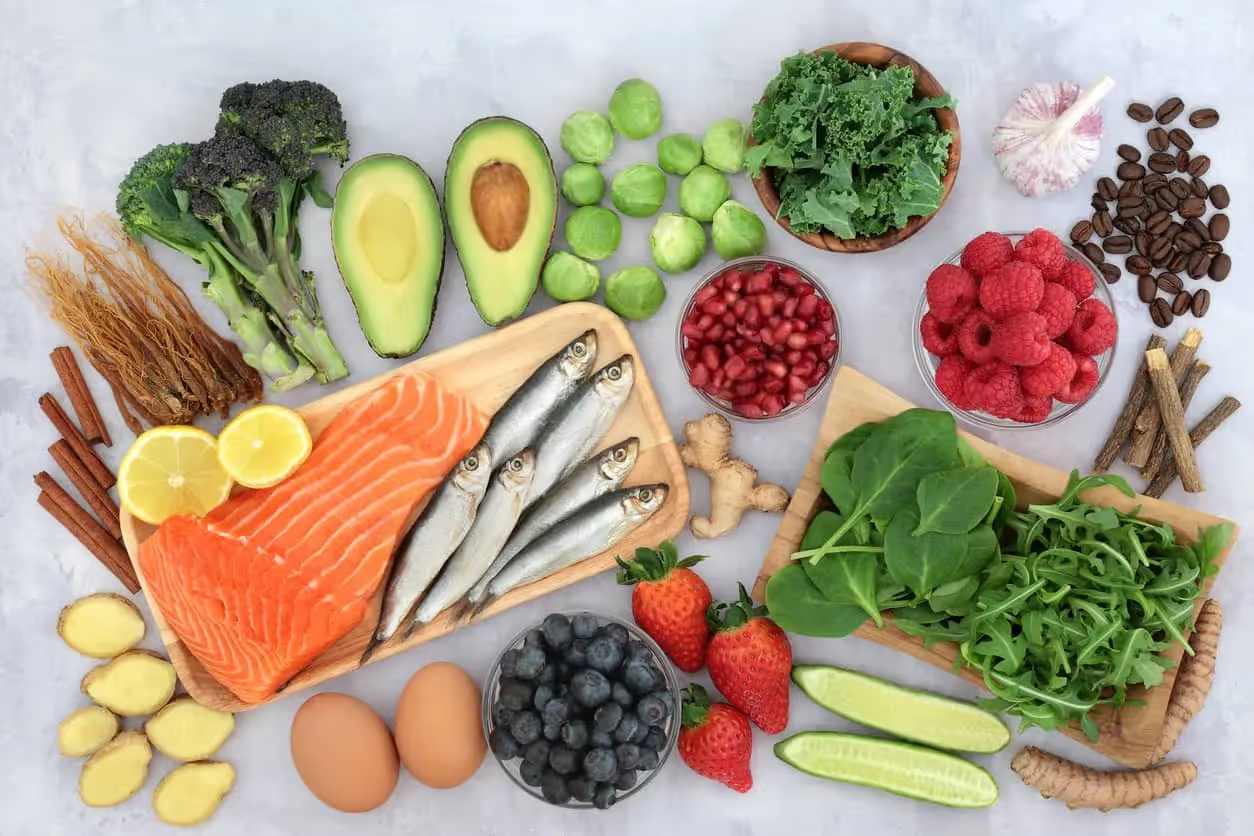
What Is a No Diet Dietitian?

Medical Reviewer: Lindsay Cohen, RDN, LDN, CDCES, NBC-HWC

Author: Julia Zakrzewski, RD

Summary
- Following a restrictive eating pattern can leave you hungry and unsatisfied, with bouts of low mood and depression.
- Chronic dieters are not likely to experience long-term weight loss results.
- A no-diet dietitian can help you meet your nutrition and health goals by focusing on behavior change instead of weight outcomes.
It is not uncommon for a fad diet or weight loss program to promise overnight results.
These restrictive programs don’t work for most people, which can be frustrating and confusing.
When the first attempt at a diet doesn’t work, it can be tempting to start a new diet all over again.
There is another option: work with a no-diet dietitian and learn how to nourish your body without following a diet plan and restrictive food rules.
In this article, you’ll learn about the health risks of chronic dieting, why diets don’t work long-term, and how a no-diet dietitian can help you reshape your relationship with food and eating.
{{splash}}
What to Expect When Working with a No-Diet Dietitian
Working with a no-diet dietitian may feel different if you've followed restrictive diet plans in the past.
You won’t leave the session with a piece of paper prescribing a specific calorie goal or a meal plan telling you what you can and can’t eat. Instead, you’ll relearn how to listen to your body and make food choices that nourish you.
Here’s what you can expect.
Focusing on Your Relationship With Food
During your session with a no-diet dietitian, you’ll explore your relationship with food and how it affects your health and well-being.
This process may mean revisiting food rules or beliefs you’ve developed based on years of diet culture and social influences (like “carbs are bad for you” or “fruit has too much sugar).
Your RD will work with you to identify any of these thought patterns or behaviors that affect your behavior surrounding food.
Acceptance of Making Mistakes
When working with your no-diet dietitian, you’ll quickly learn that it’s okay to make mistakes.
So much of diet culture is about shame and feeling bad about yourself if you don’t follow a diet “perfectly.”
It takes time to change behavior and relearn a new way of eating and enjoying food (especially if you’ve been following diets all your life).
Your dietitian is there to help you learn to be gentle with yourself while recognizing that mistakes are part of life and don’t define you as a “good” or “bad” person.
An All-Foods-Fit Mentality
Unlike a diet forbidding certain foods, a no-diet dietitian will encourage you to include all foods, so no food is strictly off-limits or forbidden.
When food no longer has a moral value, it can remove the guilt or shame associated with eating, so you can enjoy your food and learn to eat more intuitively.
Listening
A no-diet dietitian will spend a lot of time listening to your story and exploring your thought patterns about food.
While dietitians of all specialties listen, a no-diet approach really focuses on hearing your experiences without judgment.
Your dietitian will provide guidance and education, but your sessions will focus and allow you to share your feelings about food in a safe, supportive environment.
What Is a No Diet Dietitian?
A no-diet dietitian (sometimes referred to as an anti-diet dietitian) can help you achieve your health goals without prescribing weight loss plans or fad diets.
No-diet dietitians avoid recommending these types of diets because they are restrictive, difficult to maintain long-term, and ineffective.
Food offers more than just calories, vitamins, and minerals.
A no-diet approach can help you build a balanced way of eating that helps you meet your health goals without relying on weight-focused outcomes.
You can start a no-diet approach to eating by following intuitive eating practices.
This includes listening to your hunger and fullness cues, rejecting diet culture, and making peace with food.
Why Restrictive Diets Don't Work
Restrictive diets don’t produce long-term results because they don’t address core motivators that influence food choices.
They are also rarely sustainable.
Restrictions may vary between diets, but similar themes include eliminating high-calorie foods and sometimes even entire food groups.
Here are examples of popular restrictive diets:
- The Ketogenic diet: reduces carbohydrate intake and promotes liberal fat intake. The diet was initially created to treat epilepsy in children, but this practice has been retired because medications are more effective. It is now marketed for weight loss purposes in adults.
- Atkins diet: a very low carbohydrate diet that promotes a high protein intake. Research has found that following this dietary pattern can increase the risk of cardiovascular disease in some people.
- Paleolithic diet: exclusively choose unprocessed foods that are similar to what our ancestors would have eaten thousands of years ago. This diet can be expensive and nutritionally unbalanced, exposing you to micronutrient deficiencies. Research has shown this diet provides less than 50% of daily calcium needs.
Programs that offer quick fixes rarely work long-term. Additionally, weight loss progress and changes in cardiovascular parameters, such as blood cholesterol improvements, can plateau after twelve months. There is speculation this can happen because diet adherence can decline after a year.
Working with a no-diet dietitian can help you make nutrition changes to support your long-term health goals. They emphasize teaching you health-promoting behaviors instead of focusing on the number on the scale.
Other Forms of Dietary Restrictions
Weight loss and fad diet restrictions can extend beyond food choices.
They can also restrict or modify behaviors around eating.
These are called food rules and can foster feelings of guilt, regret, or shame if you “break the rules.”
Examples of common food rules include not eating after eight p.m., eating everything on your plate, avoiding fried foods, and cooking all meals from scratch.
You should not feel guilty for eating foods that don’t align with food rules.
A balanced diet prioritizes nutrient-dense foods and can include richer dishes with higher calories in moderation.
Health Risks of Chronic Dieting
Following a restrictive diet that is low in calories can leave you feeling hungry and unsatisfied.
Trying to function without enough energy can negatively affect your mood, and you may experience bouts of depression, irritability, and emotional distress.
These symptoms can decrease your quality of life significantly.
In some people, diet changes can develop into an unhealthy preoccupation with food.
Thinking and worrying about food constantly can be an early sign of disordered eating.
If these behaviors are not addressed, they can develop into a diagnosable eating disorder.
Weight cycling refers to the changes in weight over time, which is common for people who engage in chronic dieting behaviors.
While dieting, weight can go down, but once the diet ends and restrictive practices are left behind, the weight can return.
Weight cycling has been linked to an increased risk of type two diabetes and worsened cardiometabolic parameters such as hypertension (high blood pressure).
A no-diet dietitian can teach you to eat regularly and avoid the potential health risks of weight cycling or restrictive eating.
A New Definition of Diet
The technical definition for diet, per Merriam-Webster, is the food or drink habitually consumed for nourishment.
A no-diet dietitian can teach you to include foods that fit your needs and preferences.
Preferences will be individualized but can include the following:
- Budget.
- Flavor preferences.
- Dietary restrictions (gluten-free, lactose intolerant, vegetarian, allergies, etc.)
- Cooking skills.
- Health and nutrition goals.
The 2020-2025 Dietary Guidelines for Americans promote the importance of including culturally significant foods.
Including traditional dishes is important to your overall diet satisfaction and should be prioritized.
How to Find a No-Diet Dietitian
Once hard to find, the growth of dietitians who practice a no-diet approach has increased in recent years, so it’s a lot easier to find someone with this specialty than ever before. There are several ways to find a no-diet dietitian, including:
Nourish
Nourish makes it easy to find a dietitian near you or thanks to telehealth, virtual appointments are available nearly everywhere.
94% of Nourish patients pay $0 out of pocket to see a dietitian (you can check your insurance coverage here).
Online searches
You can find an online dietitian easily by searching online using “no-diet dietitian” or “anti-diet dietitian”.
Referrals
Depending on your healthcare provider, your doctor may be able to refer you to a no-diet dietitian that they trust.
Friends and family can be a great referral source, too.
Takeaway
Studies and reviews have shown that chronic dieting does not work long-term.
Researchers followed a group of women who engaged in diet practices for 21 years.
After two decades, they found these women had little to no success with weight loss compared to non-dieters, and they had maintained restrictive eating behaviors. Knowing this information might make you reconsider if dieting is worth it.
{{splash}}
See an RD Online with Nourish
Up to 49% of the American population has followed or is currently following a fad or weight loss diet within the last twelve months. Research has shown that weight loss results will only last a short time. If you’re ready, try working with a no-diet dietitian instead of starting another diet program. It can be a welcomed and refreshing experience.
Find a dietitian who accepts insurance through Nourish.
Frequently Asked Questions
References
View all references
- Maclean, P. S., Bergouignan, A., Cornier, M. A., & Jackman, M. R. (2011). Biology's response to dieting: the impetus for weight regain. American journal of physiology. Regulatory, integrative and comparative physiology, 301(3), R581–R600.
- The Original Intuitive Eating Pros. (2019, December 19). 10 Principles of Intuitive Eating - Intuitive Eating. Intuitive Eating.
- Wheless J. W. (2008). History of the ketogenic diet. Epilepsia, 49 Suppl 8, 3–5.
- O'Neill, B., & Raggi, P. (2020). The ketogenic diet: Pros and cons. Atherosclerosis, 292, 119–126.
- Oh R, Gilani B, Uppaluri KR. Low Carbohydrate Diet. [Updated 2022 Jul 11]. In: StatPearls [Internet]. Treasure Island (FL): StatPearls Publishing; 2022 Jan-.
- Challa HJ, Bandlamudi M, Uppaluri KR. Paleolithic Diet. [Updated 2022 Jul 4]. In: StatPearls [Internet]. Treasure Island (FL): StatPearls Publishing; 2022 Jan-.
- Tahreem, A., Rakha, A., Rabail, R., Nazir, A., Socol, C. T., Maerescu, C. M., & Aadil, R. M. (2022). Fad Diets: Facts and Fiction. Frontiers in nutrition, 9, 960922.
- Bailey-Davis, L., Poulsen, M. N., Hirsch, A. G., Pollak, J., Glass, T. A., & Schwartz, B. S. (2017). Home Food Rules in Relation to Youth Eating Behaviors, Body Mass Index, Waist Circumference, and Percent Body Fat. The Journal of adolescent health : official publication of the Society for Adolescent Medicine, 60(3), 270–276.
- Home | Dietary Guidelines for Americans. (n.d.).
- Memon, A. N., Gowda, A. S., Rallabhandi, B., Bidika, E., Fayyaz, H., Salib, M., & Cancarevic, I. (2020). Have Our Attempts to Curb Obesity Done More Harm Than Good?. Cureus, 12(9), e10275.
- McCargar, L. J., & McBurney, R. F. (1999). The Chronic Dieting Syndrome: Metabolic and Behavioural Characteristics. Canadian journal of dietetic practice and research : a publication of Dietitians of Canada = Revue canadienne de la pratique et de la recherche en dietetique : une publication des Dietetistes du Canada, 60(4), 227–230.
- Rhee E. J. (2017). Weight Cycling and Its Cardiometabolic Impact. Journal of obesity & metabolic syndrome, 26(4), 237–242.
- Definition of diet. (2023, March 6). Merriam-Webster Dictionary.
- Jahns, L., Davis-Shaw, W., Lichtenstein, A. H., Murphy, S. P., Conrad, Z., & Nielsen, F. (2018). The History and Future of Dietary Guidance in America. Advances in nutrition (Bethesda, Md.), 9(2), 136–147.
- Products - Data Briefs - Number 313 - July 2018. (n.d.).
Nourish has strict sourcing policies and prioritizes primary sources, including medical organizations, governmental agencies, academic institutions, and peer-reviewed scientific journals. Learn more about our medical review process and editorial guidelines.












.jpg)
























.avif)


.avif)





























.avif)

%20(1).webp)







.avif)
.avif)